Featured Story

Mangroves move inland as seas rise

Adapting to the damaging effects of climate change, plants are gradually moving to where temperatures are cooler, rainfall is greater, f...

Showing posts with label Global Warming. Show all posts

9/16/2015

Global warming to pick up in 2015, 2016


Man-made global warming is set to produce exceptionally high average temperatures this year and next, boosted by natural weather phenomena such as El Nino, Britain's top climate and weather body said in a report Monday.
"It looks very likely that globally 2014, 2015 and 2016 will all be amongst the very warmest years ever recorded," Rowan Sutton of the National Centre for Atmospheric Science, which contributed to the report, told journalists.
"This is not a fluke," he said. "We are seeing the effects of energy steadily accumulating in the Earth's oceans and atmosphere, caused by greenhouse gas emissions."
The rate at which global temperatures are increasing is also on track to pick up in the coming years, ending a period of more than a decade in which the pace of warming worldwide had appeared to slow down, the report said.
This "pause" has been seized upon by sceptics as evidence that climate change was driven more by natural cycles than human activity.
Some scientists, however, argue that there was no significant slowdown, pointing instead to flawed calculations.
The 20-page report from Britain's Met Office, entitled "Big changes underway in the climate system?", highlights current transitions in major weather patterns that affect rainfall and temperatures at a regional level.
An El Nino weather pattern centered in the tropical Pacific Ocean is "well underway", the report says, and shaping up to be one of the most intense on record. Very strong El Ninos also occurred over the winters of 1997 and 1982.
Set to grow stronger in the coming months, the current El Nino -- a result of shifting winds and ocean circulation -- is likely to result is dry conditions in parts of Asia and Australia, as well as southern and sub-Saharan North Africa, the Met Office said.
By contrast, the southwestern United States -- including parched California, suffering from an historic drought -- has a strong chance of seeing higher-than-average rainfall.
El Ninos also affect tropical storms, making them less likely in the North Atlantic and more intense in the West Pacific, where they are known as typhoons.
Overall, an El Nino is also likely to add a little heat to the general impact of global warming.
Meanwhile, warming sea surface temperatures along the North American west coast point to a reversal of another natural pattern called the Pacific Decadal Oscillation.
This, too, could temporarily nudge regional temperatures higher, but has yet to be confirmed, the report said.
Finally, the interplay of ocean currents and atmosphere in the Atlantic -- another multi-decade oscillation -- is moving the other way, and will have a cooling effect.
"The current warm phase is now 20 years long and historical precedent suggests a return to relatively cool conditions could occur within a few years," the report says.
By itself, that would mean cooler and drying summers in northern Europe, and increased rainfall in the northeastern United States.
While all of these cyclical forces affect weather and temperatures trends, global warming is the main driver of change today, the report concluded.
"We know that natural patterns contribute to global temperature in any given year, but very warm temperatures so far this year indicate the continued impact of increasing greenhouse gases," said Stephen Belcher, director of the Met Office Hadley Centre.

read more...

3/17/2014

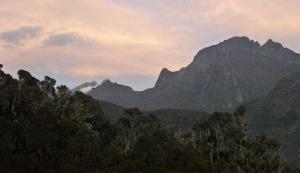
Vanishing ice warning for 'Africa's Alps'

The Rwenzori mountain range on the border between Uganda … Rwenzori Mountains (Uganda) (AFP) - In swirling snow, John Medenge prods a thin ice bridge over a crevasse with an iron-tipped spear, guiding climbers scaling the steep glacial wall using crampons and axes.
"We are the last few who will climb on the ice, it is going so fast," said Medenge, after scaling the treacherous ridge up Mount Stanley, part of the dramatic Rwenzori mountain range straddling the border between Uganda and Democratic Republic of Congo.
At 5,109 metres (16,763 feet), Stanley's jagged peak is the third highest mountain in Africa, topped only by Mount Kenya and Tanzania's iconic Kilimanjaro.
But experts warn the ice is melting at "disturbing" rates, and that within two decades Africa's equatorial peaks will be bare rock, impacting agriculture and tourism.
"Every year the ice grows smaller," 54-year old Medenge added, who has been climbing the range since a teenager.
Ancient Greek geographer Ptolemy in Alexandria wrote of the snow-capped Rwenzoris around the second century AD, dubbing the mysterious peaks the "Mountains of the Moon", and identifying them as a source of the mighty White Nile.
- 'Canary in the mine' -
But after centuries of wonder at the spectacle of snow on the equator, the ice is vanishing, bringing with it multiple challenges.
"The melting glaciers are another warning sign, a 'canary in the mine' of mankind's inability to contain climate change and its negative consequences," said Luc Hardy of Pax Arctica, an organisation that promotes awareness of the impact of climate change, and who led an expedition in January to the mountains.
"The melting of this unique African glacier is a major threat to local communities, with the obvious loss of sustainable water supplies," said Hardy, a French-American explorer and a vice-president of the environmental Green Cross group.
Reduced glacial river flows are already impacting agricultural production and cutting the output of hydroelectric power plants, said Richard Atugonza, from the Mountain Resource Centre at Uganda's Makere University.
"It can be a big problem in the future for the region, with the river ecology already changing," Atugonza said.
Just a handful of kilometres (miles) north of the equator, the mist-covered Rwenzoris -- meaning "rain-maker" in the local Bakonzo language -- stretch for some thousand kilometres squared (386 square miles), and include several short glaciers, though on many peaks remaining ice is now tiny patches.
British-American explorer Henry Morton Stanley was the first Westerner to sight the ice in 1889, but the dramatic sight of glinting snow in hot sunshine is fading fast, with maps showing the ice has shrunk from some seven square kilometres (2.7 square miles) when they were first climbed in 1906, to just a single square kilometre (a third of a square mile) today.
Fifty years ago, the glacier once began a stone's throw from the cliff-top Elena camp, where mountaineers shiver in basic huts before making a pre-dawn attempt to scale Stanley's peaks.
Now the ice lies almost an hour's tough scramble up a steep track on loose rocks along sheer cliffs.
- Impacting agriculture and tourism -
Mountain guides say the local king sends elders to sacrifice chickens and goats at the foot of the mountains to appease the gods that live in the peaks, to stem the vanishing ice.
"Global warming was not caused by people here, but it is harming us," Baluku Stanley said, chairman of one of the main trekking companies, the community-run Rwenzori Mountaineering Services.
"Of course when the ice goes it will affect tourism, even though trekking in the valleys is amazing," he added.
Spectacular valleys with fantastical vegetation akin to a fairy story -- including bizarre twisted trees draped in near luminous green lichen, giant lobelia plants and heather some five metres (15 feet) tall -- offer extraordinary trekking, even once the ice has gone.
Elephant, leopards, monkeys and chimpanzees hide in the thick lower jungle, while at higher altitudes, colourful birds endemic to the range swoop over the vast bogs that line the valleys.
But in higher reaches, new climbing routes have to be found, as the retreating ice make old paths unusable, with dangling rusting ladders once used to climb onto the glaciers now ending dangerously in mid-air.
The peaks offer some of the only proper ice climbing in Africa, attracting mountaineers from across the world to the challenging climb, though numbers reaching the top summits are tiny compared to those scaling peaks in neighbouring Kenya or Tanzania.
"The Rwenzoris are some of the most exciting glacier trekking and climbing I've done, rivalling peaks in Europe and South America," said Paul Drawbridge, a keen British mountaineer on an eight-day expedition to climb Stanley.
"It is such a shame to think that any children I may have will never get to see the ice-capped peaks."

read more...

3/15/2014

Global Warming Slows Antarctica's Coldest Currents

The deep, salty currents that carry oxygen and nutrients to the ocean depths have been disappearing over the past few decades


A shift from briny to fresh in Antarctica's ocean waters in recent decades could explain the shutdown of the Southern Ocean's coldest, deepest currents, a new study finds.
The cold currents, called the Antarctic Bottom Water, are chilly, salty rivers that flow from the underwater edge of the Antarctic continent north toward the equator, keeping to the bottom of the seafloor. The currents carry oxygen, carbon and nutrients down to the deepest parts of the ocean. Previous studies have found this deep, dense water is disappearing, though researchers aren't sure if the shrinkage is part of a long-term trend linked to global warming, or a natural cycle.
The new study suggests that Antarctica's changing climate is to blame for the shrinking Antarctica Bottom Water. In the past 60 years, the ocean surface offshore Antarctica became less salty as a result of melting glaciers and more precipitation (both rain and snow), researchers reported Sunday (March 2) in the journal Nature Climate Change. This growing freshwater layer is the key link in a chain that prevents the cold-water currents from forming, the study finds.
"Deep ocean waters only mix directly to the surface in a few small regions of the global ocean, so this has effectively shut one of the main conduits for deep-ocean heat to escape," said Casimir de Lavergne, an oceanographer at McGill University in Montreal.
Holey ice
The linchpins linking freshwater and cold currents are polynyas, or natural holes within sea ice. These persistent regions of open water form when upwellings of warm ocean water keep water temperatures above freezing, or when winds drive sea ice away from the coast.
Polynyas are one of the main sources of Antarctica Bottom Water. Polynyas act like natural refrigerators, letting frigid temperatures and cold winds chill seawater and send it sinking down to the ocean bottom. As the cold water sinks, warmer ocean water comes up to take its place, maintaining the polynya's open water. [Album: Stunning Photos of Antarctic Ice]
But as Antarctica's ocean surface water has freshened, fewer polynyas have appeared, the researchers found. That's because the fresher water is less dense. Even if the water is very cold, it doesn't sink as readily as saltier water, de Lavergne explained. The freshwater acts like a lid, shutting down the ocean circulation that sends cold water to the seafloor, and brings up warm water into the polynyas.
"What we suggest is, the change in salinity of the surface water makes them so light that even very strong cooling is not sufficient to make them dense enough to sink," de Lavergne told Live Science. "Mixing them gets harder and harder."
Trapped heat
In addition to warming and shrinking the Antarctic Bottom Water currents, the reduction in polynyas could be trapping extra heat in the Southern Ocean, de Lavergne said.
"If the warm waters aren't able to release their heat to the atmosphere, then the heat is waiting in the deep ocean instead," he said. "This could have slowed the rate of warming in the Southern Hemisphere."
De Lavergne cautioned that the heat-storage effect is localized and not related to the so-called global warming "hiatus" — the recent slowdown in the rise of global surface temperatures.
"Our study is still a hypothesis," he added. "We say that climate change is preventing convection from happening, but we do not know how frequent it was in the past, so that's a big avenue for future research."

Scientific American
read more...

5/30/2013

Mount Everest region glaciers retreating as climate warms

This undated photograph shows unidentified mountaineers as they walk past the Hillary Step whilst pushing for the summit of Mount Everest as they climb the south face from Nepal. (TSHERING SHERPA , AFP/GETTY IMAGES)
Even the world’s tallest mountain – first conquered by man 60 years ago today – cannot escape climate change.
A recent study led by a graduate student at the University of Milan in Italy reveals declining snow amounts and retreating glaciers in the Mount Everest region, reaffirming fears that many scientists hold – increasing global temperatures could cause irreversible damage.
The research presented at an American Geophysical Union (AGU) conference in Mexico earlier this month, shows that the glaciers in the Everest region have shrunk by 13 percent over the last 50 years.
The snowline has also moved uphill nearly 580 feet.

read more...

3/12/2013

'Penguins' survival at stake as Antarctic ice disappears


Penguins’ Survival At Stake, There are serious changes taking place here at the bottom of the world. Increasingly, experts say, the ice is disappearing at a disturbing rate in the Antarctic Peninsula and that in turn impacts the future — and perhaps the very existence — of at least half of the world’s 18 penguin species, who depend on ice and frigid waters that support krill, the penguin diet mainstay. “When cheetahs or lions get hunted, or elephants decline, there’s a big uproar. And I think, because you see penguins in large numbers [in some places] people are ignoring the larger rate of their decline,” said Oxford University penguinologist Tom Hart. “The general public doesn’t realize the penguins are declining so fast.” But it’s not just the penguins we have to worry about, Hart says, it’s the health of the planet itself. “The last wilderness on Earth is impacted by us now,” he said, describing the region’s decline as a “grave indicator” of what’s to come. It’s the end of the breeding cycle for most penguins here as summer comes to a close.

read more...

11/01/2012

Seismic signs of escaping methane under the sea

Sand is not the only thing on the move in the waters off the eastern United States — a shift in the Gulf Stream is melting methane hydrate in sediments that could release methane gas.
David A. Harvey/National Geographic/Getty Images

A changing Gulf Stream is warming deep waters along the eastern United States and destabilizing greenhouse gases trapped in sediments.


Somewhere off the eastern coast of North Carolina, a frozen mixture of water and methane gas tucked in seabed sediments is starting to break down. Researchers blame a shifting Gulf Stream — the swift Atlantic Ocean current that flows north from the Gulf of Mexico — which is now delivering warmer waters to areas that had previously only experienced colder temperatures.
“We know methane hydrates exist here and, if warming continues, it can potentially lead to less stable sediments in this region,” says Matthew Hornbach, a marine geologist at the Southern Methodist University in Dallas, Texas, who led the study that is published online today in Nature1. The results suggest that the warmer temperatures are destabilizing up to 2.5 gigatonnes of methane hydrate along the continental slope of the eastern United States. This region is prone to underwater landslides, which could release the methane, a powerful greenhouse gas.
Whether that methane would make it to the atmosphere and worsen global warming is unclear, but scientists think that it is unlikely. “We don’t need to worry about any huge blow of methane into the atmosphere,” says Carolyn Ruppel, a geophysicist at the US Geological Survey in Woods Hole, Massachusetts. Rather, she says, Hornbach and his co-author Benjamin Phrampus, also of the Southern Methodist University, have uncovered a powerful new way to use data from the geological record to catch non-anthropogenic climate changes that are already happening.


read more...

10/11/2012

Glaciers Cracking in the Presence of Carbon Dioxide

Researchers have shown that the material strength and fracture toughness of ice are decreased significantly under increasing concentrations of CO2 molecules, making ice caps and glaciers more vulnerable to cracking and splitting into pieces. (Credit: © Serg Zastavkin / Fotolia)
The well-documented presence of excessive levels of carbon dioxide (CO2) in our atmosphere is causing global temperatures to rise and glaciers and ice caps to melt. New research, published October 11, in IOP Publishing's Journal of Physics D: Applied Physics, has shown that CO2 molecules may be having a more direct impact on the ice that covers our planet.
Researchers from the Massachusetts Institute for Technology have shown that the material strength and fracture toughness of ice are decreased significantly under increasing concentrations of CO2 molecules, making ice caps and glaciers more vulnerable to cracking and splitting into pieces, as was seen recently when a huge crack in the Pine Island Glacier in Antarctica spawned a glacier the size of Berlin.


read more...

10/08/2012

Scientists blame warmer Atlantic for wet summers

Recent warming in the Atlantic Ocean is the main cause of wet summers in northern Europe, according to a new study.
A cyclical pattern of rising and falling ocean temperatures is seen as a major influence on our weather.
Scientists say the current pattern will last as long as the Atlantic warming persists.
The research was carried out at the University of Reading and is published in the journal Nature Geoscience.
The study investigated a phenomenon known as the Atlantic Multidecadal Oscillation - a cycle of change in which the waters either warm or cool over a period of several decades.

read more...

9/20/2012

Sea Surface Temperatures Reach Record Highs off Northeast Coast

During the first six months of 2012, sea surface temperatures in the Northeast Shelf Large Marine Ecosystem were the highest ever recorded, according to NOAA's Northeast Fisheries Science Center.
The Northeast Continental Shelf Large Marine Ecosystem (LME) extends from the Gulf of Maine to Cape Hatteras, N.C.
The average sea surface temperature (SST) exceeded 51.0 degrees F during the first half of 2012, breaking the previous record high set in 1951. For the past three decades, the average SST has been 48 degrees F.
In some nearshore locations such as the Delaware and Chesapeake bays in the Middle Atlantic Bight region, temperatures were more than 11 degrees F above historical average at the surface and more than 9 degrees F above average at the bottom.
"A pronounced warming event occurred on the Northeast Shelf this spring, and this will have a profound impact throughout the ecosystem," said Kevin Friedland, a scientist in the NEFSC's Ecosystem Assessment Program.

read more...

7/12/2012

Latest signs of a worsening drought

Add captionA dock extends into a dry cove at Morse Reservoir in Noblesville, Ind., on July 5. The central Indiana reservoir is down 3.5 feet from normal levels. Michael Conroy / AP file
From exploding hay bales to a sprinkler ban in Indianapolis, the Midwest and Plains states continue to be tested by a hot, dry summer.
A drought update Thursday didn't offer much hope either: 61 percent of the contiguous U.S. was listed in drought, up from 56 percent last week, according to the National Weather Service's Drought Monitor.
"Anytime we have a drought maturing in mid-summer, the chances for rapid intensification will be there," Gary McManus, Oklahoma's associate state climatologist, told msnbc.com. "Even normal heat and dry conditions can speed that drought along."

read more...

5/09/2012

Warmest May to April ever for U.S


(Reuters) - The contiguous U.S. states posted record warmth from May 2011 through April, and drought conditions spread across more than a third of this area during the first months of 2012, the National Oceanic and Atmospheric Administration NOAA.L said on Tuesday.
The contiguous United States had a national average temperature of 55.7 F (13.2 C) from May 2011 to April 2012, 2.8 F (1.6 C) above the 20th century average, NOAA said in a statement.
It was the warmest ever May-to-April period in the lower 48 states. It included the second-hottest summer, fourth-warmest winter and the warmest March. Twenty-two states posted record warmth for the period.
The first four months of the 2012 were the warmest on record. The average temperature for the contiguous states during these months was 45.4 F (7.4 C), 5.4 F (3 C) above normal.

read more...

4/05/2012

Carbon Dioxide Linked to End of Last Ice Age

This graph shows Antarctica warming up slightly before atmospheric carbon dioxide rose and well before global temperatures warmed. In a new study, researchers explain that a change in the Earth's orbit resulted in a change in ocean circulation that prompted the Antarctic to warm before the rest of the planet.
CREDIT: Jeremy Shakun
The circumstances that ended the last ice age, somewhere between 19,000 and 10,000 years ago, have been unclear. In particular, scientists aren't sure how carbon dioxide, a greenhouse gas, played into the giant melt.
New research indicates it did in fact help drive this prehistoric episode of global warming, even though it did not kick it off. A change in the Earth's orbit likely started of the melt, setting off a chain of events, according to the researchers.

read more...

3/19/2012

What Happened to Winter?

The Stidman family, Fil, Anna, and their daughters Laura, back left, and Sarah, of Raleigh, N.C. enjoy the warm Washington weather underneath a blooming magnolia tree on the Capitol grounds, March 12, 2012. (Manuel Balce Ceneta/AP Photo)
The winter of 2011-12 might well earn the title of "the winter that wasn't" in many parts of the United States.
The season has entered the books as the fourth warmest on record for the Lower 48, according to an analysis by the National Climatic Data Center in Asheville, N.C.
In January, for instance, daily high-temperature records were broken across the northern Plains. Minot, N.D., posted a 61 degree F. high on Jan. 5, eclipsing the previous record of 58 degrees set in 1906.
Despite several powerful snowstorms that crossed the continent during the season, the extent of the country blanketed with snow was the third smallest since satellites began keeping track 46 years ago. The amount of rain was also below normal.
What a contrast with the winter before. Who could forget the seemingly endless conga line of storms that traversed the country? That winter also was somewhat colder than normal, which meant the snow didn't melt significantly between storms, explains Jeff Weber, a meteorologist at the National Center for Atmospheric Research (NCAR) in Boulder, Colo.

read more...

3/16/2012

Record-breaking warm weather advances beginning of growing season

Fig 1
Recent abnormally warm weather has resulted in a very early start to the growing season across the Great Lakes Region and much of the central and eastern USA. The trend towards warmer than normal conditions is not new, with above normal mean temperatures observed across Michigan during much of the period back to the middle of last November. The winter of 2011-2012 (December through February) was the fourth mildest on record.

The prolonged warm spell is the result of a very persistent jet stream configuration across North America that generally prevented cold, arctic-origin air masses from moving out of their high-latitude source regions southward into the central and eastern USA. This left the area under the influence of relatively mild Pacific-origin air masses. The current jet stream pattern, with deep troughing across the western USA and ridging across the east has accentuated the pattern. The result is record-breaking warmth brought northward from the Gulf States on southerly winds.

read more...

2/10/2012

Believe it or not, the Sky is Falling

A new paper just published in Geophysical Research Letters by Roger Davies and Mathew Molloy of the University of Auckland finds that over the past decade the global average effective cloud height has declined and that “If sustained, such a decrease would indicate a significant measure of negative cloud feedback to global warming.”
Davies and Molloy are quick to point out that part of the decline from 2000 to 2010 in cloud height is due to the timing and variability of El Niño/La Niña events over the same period, however, there still seems to be evidence that at least part of the decline may remain even when El Niño/La Niña variability is accounted for.

read more...

2/02/2012

Arctic Is Already Suffering the Effects of a Dangerous Climate Change

Two decades after the United Nations established the Framework Convention on Climate Change in order to “prevent dangerous anthropogenic interference with the climate system,” the Arctic shows the first signs of a dangerous climate change. (Credit: Image courtesy of CSIC, Consejo Superior de Investigaciones Científicas)
ScienceDaily (Jan. 30, 2012) — Two decades after the United Nations established the Framework Convention on Climate Change in order to "prevent dangerous anthropogenic interference with the climate system," the Arctic shows the first signs of a dangerous climate change. A team of researchers led by CSIC assures so in an article recently published in Nature Climate Change 
These researchers assert that the Arctic is already suffering some of the effects that, according to The Intergovernmental Panel on Climate Change (IPCC), correspond with a "dangerous climate change." 

read more...

11/17/2011

Get ready for climate change, says UN panel

The toll from ever-more intense floods, drought, and heatwaves will crescendo this century unless humanity anticipates the onslaught, according to a UN report set to be unveiled on Friday.
In an 800-page assessment, the Nobel-winning Intergovernmental Panel on Climate Change (IPCC) says global warming will magnify the frequence and force of extreme weather events, and defences must be prepared now to avoid worse misery in the future.
"The character and severity of impacts ... depends not only on the extremes themselves but also on vulnerability and exposure," notes a draft "summary for policymakers" obtained by AFP.
The 20-page document is being vetting this week at a meeting of the 194-nation body in Kampala, Uganda.
UN Secretary-General Ban Ki-moon drove home the "be prepared" message at a climate forum in Dhaka on Monday.
"Natural hazards need not cause human catastrophe," he said. "There are many cost-effective remedies that communities and countries can take to reduce the impact of extreme weather events."
Poor countries with scant margin for manoeuvre will be hit first and hardest.
But the 2003 heatwave that killed 70,000 in Europe and Hurricane Katrina's flooding of New Orleans are deadly reminders that rich countries must brace for impacts too.
And beyond a certain threshold, the report cautions, all efforts to adapt may be overwhelmed unless the underlying carbon emissions that drive global warming are held in check.

read more...

10/31/2011

Global Warming Target to Stay Below 2 Degrees Requires More Action This Decade

ScienceDaily (Oct. 27, 2011) — Climate scientists say the world's target to stay below a global warming of 2 degrees, made at the United Nations conference in Copenhagen in 2009 and Cancun 2010 will require decisive action this decade.

A comprehensive review of 193 emission scenarios from scientific literature to date has been published in Nature Climate Change by University of Melbourne and international scientists.
This study found the target of 44 billion tons of carbon dioxide equivalent emissions (GtCO2eq) by 2020 is a feasible milestone and an economically optimal approach for countries to meet the internationally agreed 2 degree target.

read more...

10/22/2011

Global warming 'confirmed' by independent study

The Berkeley group's record of global land temperature mirrors existing ones closely
The Earth's surface really is getting warmer, a new analysis by a US scientific group set up in the wake of the "Climategate" affair has concluded.
The Berkeley Earth Project has used new methods and some new data, but finds the same warming trend seen by groups such as the UK Met Office and Nasa.
The project received funds from sources that back organisations lobbying against action on climate change.
"Climategate", in 2009, involved claims global warming had been exaggerated.
Emails of University of East Anglia (UEA) climate scientists were hacked, posted online and used by critics to allege manipulation of climate change data.

read more...

9/13/2011

Arctic ice cover hits historic low

The area covered by Arctic sea ice reached it lowest point this week since the start of satellite observations in 1972, German researchers announced on Saturday.
On September 8th, the North Pole's icy skull cap shrank to 4.24 million square kilometres (1.637 million square miles), about half-a-percent under the previous record low set in September 2007, according to the University of Bremen's Institute of Environmental Physics.

read more...
 
Copyright © 2018 Great Red Comet-Earth Science Chronicles • All Rights Reserved.
Template Design by BTDesigner • Powered by Blogger
back to top