Featured Story

Mangroves move inland as seas rise

Adapting to the damaging effects of climate change, plants are gradually moving to where temperatures are cooler, rainfall is greater, f...

Showing posts with label Earth/Science News. Show all posts

5/06/2016

Wave of dead sea creatures hits Chile's beaches


Heaps of dead whales, salmon and sardines blamed on the El Nino freak weather phenomenon have clogged Chile's Pacific beaches in recent months.
Last year, scientists were shocked when more than 300 whales turned up dead on remote bays of the southern coast. It was the first in a series of grim finds.
At the start of this year, a surge in algae in the water choked to death an estimated 40,000 tons of salmon in the Los Lagos region, where the Andes tower over lakes and green farming valleys down to the coast.
That is about 12 percent of annual salmon production in Chile, the world's second-biggest producer of the fish after Norway.
This month, some 8,000 tons of sardines were washed up at the mouth of the Queule river. And thousands of dead clams piled up on the coast of Chiloe Island.
Authorities blamed a "red tide" of algae.
They banned fishing in the affected region, putting thousands of fishermen out of work.
"We have red tides every year in southern Chile, but this time it reached further north," said Jorge Navarro, a researcher at the marine institute IDEAL.
"It affected bivalve populations (such as clams) that had never before been exposed like this" to the algae, he said.
On the shores of Santa Maria Island off the center off Chile's long coast, cuttlefish have been washed up dead in the thousands.
Various beaches in the center of the country were closed meanwhile as the specimens of the dreaded Portuguese Man-of-War jellyfish, normally foreign to the area, floated nearby.
- Shifting oceans -
Scientists largely blame the anomalies on El Nino, a disruptive weather phenomenon that comes with warming sea surface temperatures in the equatorial Pacific.
With its 4,000 kilometers (2,485 miles) of Pacific coastline, Chile is particularly exposed to the effects of El Nino, which strikes every few years.
"We think that a common factor in the deaths of creatures in southern Chile, in the salmon farms and in fish off the coast is the El Nino phenomenon," said experts at the Chilean fisheries institute IFOP.
The current El Nino "has been classed as one of the most intense in the past 65 years," they told AFP in a statement.
Warmer sea water can lead to greater quantities of algae. They kill others species by consuming oxygen in the water or filling it with toxins.
"The Chilean ocean is shifting and changing," said Sergio Palma, an oceanographer at Valparaiso Catholic University.
"There has been a series of events that indicate an El Nino which is making its presence felt in many ways."
- Fish farming impact -
But scientists also suspect other causes for the mass destruction of the sea creatures.
The huge toll of whales last year "could be caused by a natural ecological process" that may be nothing to do with what killed the sardines and clams, said Laura Farias, an oceanographer at Concepcion University.
"There is no ecological, oceanographic or climatic explanation" linking the whales to the other incidents, she said.
She suspects the growth of fish farming in Chile's southern Patagonia region is to blame for killing the salmon and clams.
"There are studies indicating that in Patagonia the greater occurrence of toxic blooms could be a consequence of aquaculture."
Various scientists have said the current El Nino seems to be subsiding, causing the surface of the sea to cool slowly.
The mass destruction of sea life has been a wake-up call, however.
"Chile still lacks information about the sea," said Valesca Montes, a fisheries specialist at the Chilean branch of the World Wildlife Fund.
"It has to invest in oceanographic studies, so that we can predict certain events" and be better prepared for climate change.

MSN
read more...

Mysterious fish die-off in Lake Toba, the largest volcanic lake in the world, terrifies residents

Lake Toba is the largest volcanic lake in the world occupying the caldera of a supervolcano on the Island of Sumatra in Indonesia.

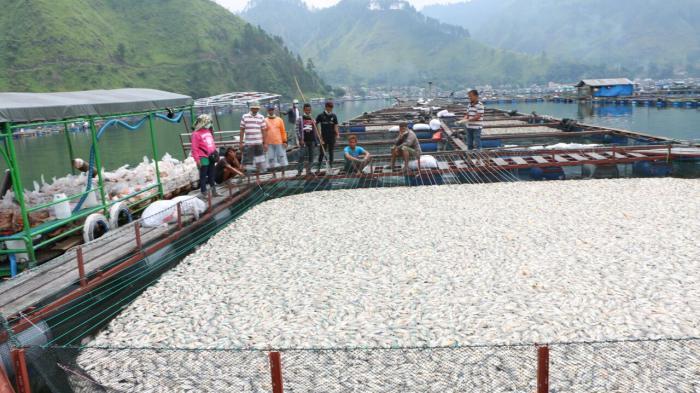
Millions of fish were found dead by fishermen between May 3 and May 5, 2016. Officials are unable to find the source of the mass killing but think it is linked to the lack of dissolved oxygen in the water. Could the drop in oxygen content in the north-east of lake Toba be the result of volcanic activity of some kind?

  It all started one month ago, when fishermen at Lake Toba started to find dead fish in their nets.


lake toba mass die-off, lake toba fish mass die-off, lake toba eruption, volcanic unrest lake toba, mysterious fish kill lake toba, mysterious mass die-off lake toba, lake toba supervolcano eruption
via Beritasatu
But the mysterious die-offs have suddenly increased beginning of this month, when professional fishermen caught more than 320 tones (May 3, 2016) and then 800 tons (May 5, 2016) of dead fish… In overall about 1500 tones in 3 days! So millions of fish!


lake toba mass die-off, lake toba fish mass die-off, lake toba eruption, volcanic unrest lake toba, mysterious fish kill lake toba, mysterious mass die-off lake toba, lake toba supervolcano eruption
via Vulkania.ru
Fishermen report these apocalyptical fish kills have never happened before. Normally, they only find a few dead fish. But this time, all the fish are dead.


 Officials aren’t able to clearly pinpoint the cause of this still unexplained mass die-off but believe it is related to the lack of dissolved oxygen in the water.


Strange Sounds
read more...

11/24/2015

Tiny Real-Life 'Dragon' Makes A Stunning Rare Appearance

Plenty of strange and fanciful creatures have been invented within the long tradition of lore and mythology, but few real-life beings have been so aptly named after one of those from fiction.
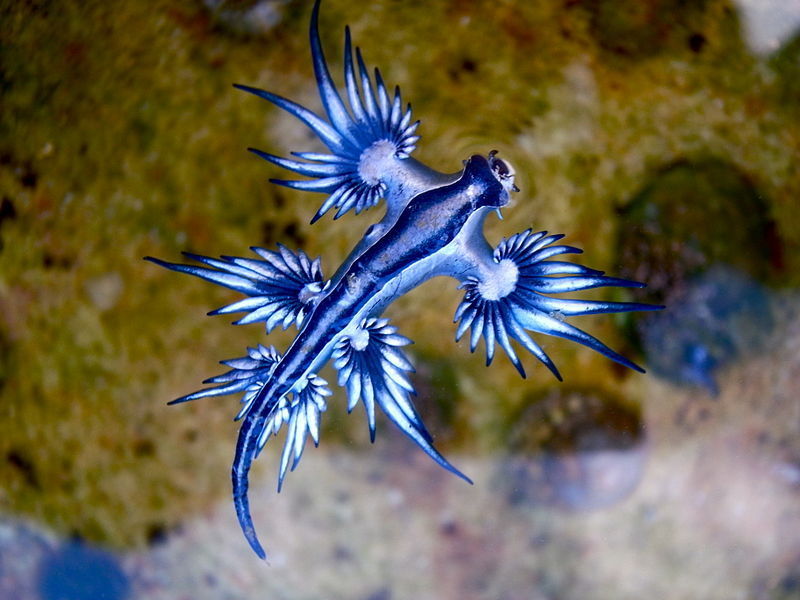
Meet the blue dragon — probably among the most beautiful animals on the planet. And he's a sea slug, no less.

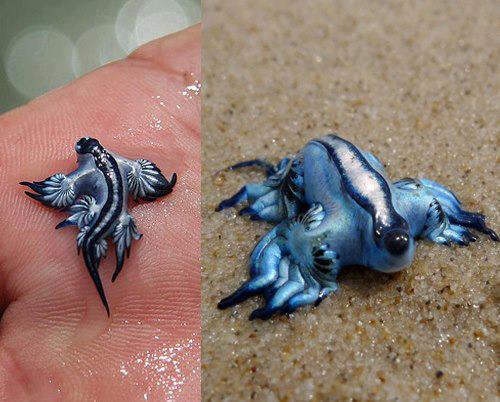
They may be a bit more diminutive than their namesake counterparts are imagined, measuring in at just over an inch fully grown, but this species is no less fearsome. Blue dragons ( Glaucus atlanticus) spend their lives floating upside down in warm ocean currents, attacking their prey with a powerful venom from their wing-like appendages. Their sting is so deadly, in fact, that they're known to take down other venomous marine animals, like the Portuguese man-o-war.

Wikipedia While blue dragons are said to be quite rarely seen by humans, the beautiful, fierce little mollusk was caught on camera just last week after washing ashore on a beach in Queensland, Australia — offering a fleeting glimpse of one of Earth's prettiest inhabitants.

read more...

10/20/2014

Extinct giant kangaroos didn't hop, they walked

THEY had faces like rabbits and some were 2 metres tall. But now it seems that an extinct giant kangaroo didn't hop – it walked.
Known as "short-faced giant kangaroos", sthenurines roamed Australia for 12.5 million years before being wiped out 30,000 years ago. No one knows what killed off these relatives of modern kangaroos, although they may have struggled as Australia's climate grew more arid.
Unlike kangaroos today, these ancient giants walked just like us. "All our evidence fits with these animals leaning on one leg at a time, like humans," says Christine Janis of Brown University in Providence, Rhode Island.
She and her team took hundreds of measurements of the bones of 66 living species of the kangaroo family and 78 extinct species, including 71 from sthenurines, to calculate the likely size and function of each animal's bones and muscles.
They found that the ill-fated sthenurines had bone structures resembling those of animals that move by shifting weight from one foot to the other, like humans and apes (PLOS One, DOI: 10.1371/journal.pone.0109888). A flange at the base of their shin bones, similar to those found in horses and humans, would have prevented their feet from collapsing sideways under the weight of their body.

Like walking primates, their pelvises fanned out at the rear. "They had big bums, and much more room for these large gluteal muscles than today's kangaroos," says Janis. These muscles would have supported each leg during walking.
Sthenurines had stiffer spines and shorter tails than modern kangaroos, which use their tails like a fifth leg. "It's reasonable that the ancestors of modern-day kangaroos moved differently," says Max Donelan of Simon Fraser University in Burnaby, Canada. "If pentapedal walking did not make biomechanical sense to these large, extinct kangaroos, they would have likely found a different solution."
Janis suggests they were browsers, taking advantage of their height and bipedalism to browse trees and shrubs for berries or other food, without having to waste energy hopping between them.
This article appeared in print under the headline "Extinct giant kangaroos didn't hop – they walked"

read more...

4/25/2014

An Unprecedented Plague Has Hit Oranges And Another Has Hit Bananas


What is causing all of these plagues to hit our food supply?  Have you heard of citrus greening disease?  Probably not, but it has already gotten so bad that it is being projected that Florida’s orange harvest will be the smallest in 30 years. 

Have you heard of TR4? 

Probably not, but it has become such a nightmare that some analysts believe that it could eventually wipe out the entire global supply of the type of bananas that Americans eat. 
In addition, another major plague is killing millions of our pigs, and a crippling drought that never seems to end is absolutely devastating agricultural production in the state of California.   Are we just having bad luck, or is there something else to all of this?
Citrus greening disease has been a steadily growing problem that has reached epidemic levels this year.  Because of this disease, the U.S. Department of Agriculture is projecting that orange production in the U.S. this year will be down 18 percent compared to last year.  Here is more on this horrible plague from Yahoo News
A citrus disease spread by a tiny insect has devastated Florida’s orange crop, which is expected to be the worst in nearly 30 years, and sent juice prices soaring on New York markets.

The culprit? The gnat-sized Asian citrus psyllid, which is infecting citrus trees across the Sunshine State with huanglongbing, or citrus greening disease, which causes fruit to taste bitter and fall from trees too soon.
“It feels we are losing the fight,” said Ellis Hunt, the head of a family-run citrus farm spread over about 5,000 acres (2,000 hectares) in the central Florida town of Lake Wales.


Another horrifying disease is threatening the global supply of bananas.  In fact, according to a recent CNBC article, the kind of bananas that we eat today could eventually be totally eliminated by the TR4 fungus…
Banana lovers take note: The world’s supply of the fruit is under attack from a fungus strain that could wipe out the popular variety that Americans eat.
“It’s a very serious situation,” said Randy Ploetz, a professor of plant pathology at the University of Florida who in 1989 originally discovered a strain of Panama disease, called TR4, that may be growing into a serious threat to U.S. supplies of the fruit and Latin American producers.
“There’s nothing at this point that really keeps the fungus from spreading,” he said in an interview with CNBC.
While there are nearly 1,000 varieties of bananas, the most popular is the Cavendish, which accounts for 45 percent of the fruit’s global crop—and the one Americans mostly find in their supermarkets.
Another plague that is affecting our food supply is a virus known as porcine epidemic diarrhea.  It has already spread to 27 different U.S. states and has already killed up to 6 million pigs since first being spotted in the U.S. last May.
As a result of this virus, pork production is going to be down substantially this year, and it is being estimated that Americans could pay up to 20 percent more for pork by the end of the year.
And of course perhaps the worst plague of all that we are experiencing at the moment is the nightmarish drought in California that never seems to end.  Conditions are so dry that it is being estimated that California farmers may leave up to 800,000 acres fallow this year.  In other words, they are not going to grow anything at all.
Needless to say, this is going to result in much smaller overall harvests.  Just check out these numbers from the New York Times
A recent report on prospective planting from the federal Department of Agriculture forecast a 20 percent decline in California’s rice crop and a 35 percent decline in cotton this year from last year’s crop.
And it isn’t just rice and cotton that we need to be concerned about.  In a previous article, I included the following information which shows how dependent the rest of the U.S. is on fruits and vegetables grown in the state of California
The state produces 99 percent of the artichokes grown in the US, 44 percent of asparagus, a fifth of cabbage, two-thirds of carrots, half of bell peppers, 89 percent of cauliflower, 94 percent of broccoli, and 95 percent of celery. Leafy greens? California’s got the market cornered: 90 percent of the leaf lettuce we consume, along with and 83 percent of Romaine lettuce and 83 percent of fresh spinach, come from the big state on the left side of the map. Cali also cranks a third of total fresh tomatoes consumed in the U.S.—and 95 percent of ones destined for cans and other processing purposes.
As for fruit, I get that 86 percent of lemons and a quarter of oranges come from there; its sunny climate makes it perfect for citrus, and lemons store relatively well. Ninety percent of avocados? Fine. But 84 percent of peaches, 88 percent of fresh strawberries, and 97 percent of fresh plums?
Come on. Surely the other 49 states can do better.
The lack of fresh produce is already being felt in California.  Usually, fresh produce accounts for about half of the food handed out at food banks in the state, but these days fresh produce is in short supply
The effects of California’s drought could soon hit the state’s food banks, which serve 2 million of its poorest residents.
Fresh produce accounts for more than half the handouts at Bay Area food banks, but with an estimated minimum of 500,000 acres to be fallowed in California, growers will have fewer fruits and vegetables to donate.
With less local supply, food prices will spike, increasing as much as 34 percent for a head of lettuce and 18 percent for tomatoes, according to an Arizona State University study released last week. With fewer fields planted, there could be as many as 20,000 unemployed agricultural workers who will need more food handouts, especially in the Central Valley.
By themselves, each one of these plagues is very serious.
Taken together, they represent an emerging “perfect storm” which could have a dramatic impact on our food supply.
So why is all of this happening?
Why is our food supply being hit with so many plagues?

Right Side News
read more...

12/15/2013

Tsunami Record Discovered in Indonesia Cave

A village near the coast of Sumatra, Indonesia, lays in ruin on January 2, 2005, after the tsunami that struck South East Asia.
Philip A. McDaniel/CNP/Corbis
A cave on the Indonesian island of Sumatra is providing a "stunning" record of Indian Ocean tsunamis over thousands of years.

Paleo-oceanographers say layers of tsunami-borne sediments found in the cave in northwest Sumatra suggest the biggest destructive waves do not occur at set intervals -- meaning communities in the area should be prepared at all times for a tsunami.

"It's something that communities need to know," research team leader Charles Rubin told AFP, adding that the team wanted to "promote safety of coastal communities".
Professor Rubin and other researchers from a Singapore institute were working with scientists from an Indonesian university when they discovered the cave, south of Banda Aceh, the capital of Aceh province.
A quake-triggered tsunami devastated Aceh and areas across the Indian Ocean in 2004, leaving some 170,000 people dead in the province alone.
Inside the cave the researchers found layers of sandy sediment, which had been washed in by tsunamis thousands of years previously, Rubin said.
The layers, which contained small fossils from the seabed, were well-preserved and separated by droppings deposited by bats in the cave, he added.
"This is a beautiful, stunning record of tsunamis that you just don't have very often," Rubin said.

PHOTOS: Changing Face of Earth in 2013

Only huge tsunamis and storm surges can get into the cave, which has a raised entrance -- and afterwards the sediment is protected inside from erosion by wind or water.
Rubin said the scientists dated the layers and believe they show that between 2,800 and 3,300 years ago, some four to five tsunamis battered the area.
Before the 2004 tsunami, it had been hundreds of years since such a huge destructive wave had hit Aceh, the scientist said.
But he said the new discovery suggests that tsunamis are not evenly spaced through time, which should provide food for thought for those involved in policy and planning in the region.
"These don't happen like clockwork, they have variations in time and variations in size," he said.
Rubin works at the Earth Observatory of Singapore, an institute that forms part of Nanyang Technological University.
Scientists from the institute were working with researchers from Syiah Kuala University in Banda Aceh.

Discovery News
read more...

11/25/2013

The Year the Monarch Didn’t Appear

Micah Lidberg
ON the first of November, when Mexicans celebrate a holiday called the Day of the Dead, some also celebrate the millions of monarch butterflies that, without fail, fly to the mountainous fir forests of central Mexico on that day. They are believed to be souls of the dead, returned.
This year, for or the first time in memory, the monarch butterflies didn’t come, at least not on the Day of the Dead. They began to straggle in a week later than usual, in record-low numbers. Last year’s low of 60 million now seems great compared with the fewer than three million that have shown up so far this year. Some experts fear that the spectacular migration could be near collapse.
“It does not look good,” said Lincoln P. Brower, a monarch expert at Sweet Briar College.
It is only the latest bad news about the dramatic decline of insect populations.
Another insect in serious trouble is the wild bee, which has thousands of species. Nicotine-based pesticides called neonicotinoids are implicated in their decline, but even if they were no longer used, experts say, bees, monarchs and many other species of insect would still be in serious trouble.
That’s because of another major factor that has not been widely recognized: the precipitous loss of native vegetation across the United States.
“There’s no question that the loss of habitat is huge,” said Douglas Tallamy, a professor of entomology at the University of Delaware, who has long warned of the perils of disappearing insects. “We notice the monarch and bees because they are iconic insects,” he said. “But what do you think is happening to everything else?”
A big part of it is the way the United States farms. As the price of corn has soared in recent years, driven by federal subsidies for biofuels, farmers have expanded their fields. That has meant plowing every scrap of earth that can grow a corn plant, including millions of acres of land once reserved in a federal program for conservation purposes.
Another major cause is farming with Roundup, a herbicide that kills virtually all plants except crops that are genetically modified to survive it.
As a result, millions of acres of native plants, especially milkweed, an important source of nectar for many species, and vital for monarch butterfly larvae, have been wiped out. One study showed that Iowa has lost almost 60 percent of its milkweed, and another found 90 percent was gone. “The agricultural landscape has been sterilized,” said Dr. Brower.
The loss of bugs is no small matter. Insects help stitch together the web of life with essential services, breaking plants down into organic matter, for example, and dispersing seeds. They are a prime source of food for birds. Critically, some 80 percent of our food crops are pollinated by insects, primarily the 4,000 or so species of the flying dust mops called bees. “All of them are in trouble,” said Marla Spivak, a professor of apiculture at the University of Minnesota.
Farm fields are not the only problem. Around the world people have replaced diverse natural habitat with the biological deserts that are roads, parking lots and bluegrass lawns. Meanwhile, the plants people choose for their yards are appealing for showy colors or shapes, not for their ecological role. Studies show that native oak trees in the mid-Atlantic states host as many as 537 species of caterpillars, which are important food for birds and other insects. Willows come in second with 456 species. Ginkgo, on the other hand, which is not native, supports three species, and zelkova, an exotic plant used to replace elm trees that died from disease, supports none. So the shelves are nearly bare for bugs and birds.
Native trees are not only grocery stores, but insect pharmacies as well. Trees and other plants have beneficial chemicals essential to the health of bugs. Some monarchs, when afflicted with parasites, seek out more toxic types of milkweed because they kill the parasites. Bees use medicinal resins from aspen and willow trees that are antifungal, antimicrobial and antiviral, to line their nests and to fight infection and diseases. “Bees scrape off the resins from the leaves, which is kind of awesome, stick them on their back legs and take them home,” said Dr. Spivak.
Besides pesticides and lack of habitat, the other big problem bees face is disease. But these problems are not separate. “Say you have a bee with viruses,” and they are run-down, Dr. Spivak said. “And they are in a food desert and have to fly a long distance, and when you find food it has complicated neurotoxins and the immune system just goes ‘uh-uh.’ Or they become disoriented and can’t find their way home. It’s too many stressors all at once.”
There are numerous organizations and individuals dedicated to rebuilding native plant communities one sterile lawn and farm field at a time. Dr. Tallamy, a longtime evangelizer for native plants, and the author of one of the movement’s manuals, “Bringing Nature Home,” says it’s a cause everyone with a garden or yard can serve. And he says support for it needs to develop quickly to slow down the worsening crisis in biodiversity.
When the Florida Department of Transportation last year mowed down roadside wildflowers where monarch butterflies fed on their epic migratory journey, “there was a huge outcry,” said Eleanor Dietrich, a wildflower activist in Florida. So much so, transportation officials created a new policy that left critical insect habitat un-mowed.
That means reversing the hegemony of chemically green lawns. “If you’ve got just lawn grass, you’ve got nothing,” said Mace Vaughan of the Xerces Society, a leading organization in insect conservation. “But as soon as you create a front yard wildflower meadow you go from an occasional honeybee to a lawn that might be full of 20 or 30 species of bees and butterflies and monarchs.”
First and foremost, said Dr. Tallamy, a home for bugs is a matter of food security. “If the bees were to truly disappear, we would lose 80 percent of the plants,” he said. “That is not an option. That’s a huge problem for mankind.” 

read more...

11/15/2013

Geological Rift That Baffles Scientists Is Still Expanding


A 500-metre-long crack opened up in just a few days in Afar, Ethiopia, in 2005 (Photo Credit: University of Rochester)
Geologists are truly surprised at how fast it developed, when a 60 meter long rift opened up in Ethiopia.
It occurred in the course of a few days, in 2005 and the rift is still expanding.
According to recent reports, particularly those from the University of Addis Ababa, Ethiopia, the rift is steadily expanding and will allow a new ocean to form and separating East Africa from the rest of the continent. 

"The ocean's formation is happening slowly, likely to take a few million years. It will stretch from the Afar depression (straddling Ethiopia, Eritrea and Djibouti) down to Mozambique," professor Atalay Ayele, lead researcher at the Addis Ababa University explained. 


The seismic movements observed in Ethiopia are very similar to the changes normally caused by faults and fissures on the seafloor, where the processes moving tectonic plates usually start However, this time it is happening violently and very fast.
Dr. James Hammond, a seismologist from the University of Bristol, says that parts of the region are below sea level and the Indian Ocean is only cut off by about a 20-meter strip of land in Eritrea:
"Eventually this will drift apart.... The sea will flood in and will start to create this new ocean.
It will pull apart, sink down deeper and deeper and eventually... parts of southern Ethiopia, Somalia will drift off, create a new island, and we'll have a smaller Africa and a very big island that floats out into the Indian Ocean." 

As the researchers explained, after last known eruption of Dabbahu in 2005, a volcano located in the remote Afar desert of Ethiopia, magma pushed up through the middle of the rift area and began "unzipping" the rift in both directions. 

The entire eastern part of the African continent has been affected by the strong forces. Both small and large cracks can be found. Photo Credit: Cindy Ebinger/University of Rochester
"We know that seafloor ridges are created by a similar intrusion of magma into a rift, but we never knew that a huge length of the ridge could break open at once like this," says professor Cindy Ebinger of Department of Earth And Environmental Science, University of Rochester. 

Message to Eagle


read more...

8/14/2013

Greenland ice sheet IS melting but much of the heating is coming from INSIDE the earth

In total, the Greeland ice sheet contains an amount of ice that would lead to a rise of global sea level by more than seven metres, if completely melted


  • Study suggests melting in an area is due to composition of Earth's mantle
  • The IceGeoHeat team claims they produced more accurate forecasts by adding their new findings to earlier models on climate change


  • Ice in Greenland is melting partly because of heat from the Earth's mantle, according to a team of international researchers.The group claims that they are the first to find a connection between melting of the Greenland ice sheet and the high heat flow from the Earth’s mantle.The findings, they suggest, could have implications for future predictions on climate change and the reasons behind ice melt in the region.

    read more...

    6/07/2013

    Irish Cold Spells Linked to Volcanic Eruptions

    Clonmacnoise monastery in the Irish Midlands. This was a center of recording of annalistic manuscripts from around A.D. 700 to A.D. 1200.
    CREDIT: Fancis Ludlow
    Major volcanic eruptions around the world have coincided with periods of unusually cold weather in Ireland for a span of more than 1,200 years, new research shows. The findings suggest eruptions could have complex effects on regional climates, possibly leading to cooling in areas of the Northern Hemisphere even in wintertime, which hadn't been clearly shown before.
    The study, published today in the journal Environmental Research Letters, reconstructed the history of cold events in Ireland from the fifth through 17th centuries A.D., based on more than 40,000 writings of scribes and monks from that time. The history of volcanic eruptions was also recreated based on levels of sulfate found in Greenland ice cores — an accepted method to date past eruptions, said study author and Harvard researcher Francis Ludlow. By comparing the two sources, Ludlow and his colleagues found cold events were more likely to occur in the years after these eruptions: More than half of the 69 coldest periods happened in the years following huge volcanic eruptions, Ludlow said.
    "This suggests that a very major volcanic eruption can have a long-lasting impact on climate, with extreme cold occurring for possibly several years after an event," Ludlow told LiveScience.
    read more...

    5/30/2013

    Mount Everest region glaciers retreating as climate warms

    This undated photograph shows unidentified mountaineers as they walk past the Hillary Step whilst pushing for the summit of Mount Everest as they climb the south face from Nepal. (TSHERING SHERPA , AFP/GETTY IMAGES)
    Even the world’s tallest mountain – first conquered by man 60 years ago today – cannot escape climate change.
    A recent study led by a graduate student at the University of Milan in Italy reveals declining snow amounts and retreating glaciers in the Mount Everest region, reaffirming fears that many scientists hold – increasing global temperatures could cause irreversible damage.
    The research presented at an American Geophysical Union (AGU) conference in Mexico earlier this month, shows that the glaciers in the Everest region have shrunk by 13 percent over the last 50 years.
    The snowline has also moved uphill nearly 580 feet.

    read more...

    5/06/2013

    Cicada Invasion! East Coast Braces For Swarms

    A cicada dries it wings on a tree branch in 2004
    Tens of millions of the insects are preparing to inflict a 17-yearly noisy hell on people living along America's East Coast.

     Colossal numbers of cicadas - quietly growing underground since 1996 - are about to emerge along much of the US East Coast to begin an orgy of passionate singing and mating.

    Billions of so-called 17-year periodical cicadas, with their distinctive black bodies, buggy red eyes, and orange-veined wings will begin to settle along a roughly 900-mile stretch from northern Georgia to upstate New York.

    The good news is they do not sting or bite, and are not harmful to crops.

    But the eerie, cacophonous mating music they produce has simultaneously amazed and infuriated people for centuries.

    read more...

    5/02/2013

    Health Defects Found in Fish Exposed to Deepwater Horizon Oil Spill, Three Years Later

    Gulf killifish embryos exposed to sediments from oiled locations show developmental abnormalities, including heart defects, delayed hatching and reduced hatching success. (Credit: Benjamin Dubansky)
    May 1, 2013 — Crude oil toxicity continued to sicken a sentinel Gulf Coast fish species for at least more than a year after the Deepwater Horizon oil spill in the Gulf of Mexico, according to new findings from a research team that includes a University of California, Davis, scientist.
    With researchers from Louisiana and South Carolina, the scientists found that Gulf killifish embryos exposed to sediments from oiled locations in 2010 and 2011 show developmental abnormalities, including heart defects, delayed hatching and reduced hatching success. The killifish is an environmental indicator species, or a "canary in the coal mine," used to predict broader exposures and health risks.
    read more...

    3/12/2013

    'Penguins' survival at stake as Antarctic ice disappears


    Penguins’ Survival At Stake, There are serious changes taking place here at the bottom of the world. Increasingly, experts say, the ice is disappearing at a disturbing rate in the Antarctic Peninsula and that in turn impacts the future — and perhaps the very existence — of at least half of the world’s 18 penguin species, who depend on ice and frigid waters that support krill, the penguin diet mainstay. “When cheetahs or lions get hunted, or elephants decline, there’s a big uproar. And I think, because you see penguins in large numbers [in some places] people are ignoring the larger rate of their decline,” said Oxford University penguinologist Tom Hart. “The general public doesn’t realize the penguins are declining so fast.” But it’s not just the penguins we have to worry about, Hart says, it’s the health of the planet itself. “The last wilderness on Earth is impacted by us now,” he said, describing the region’s decline as a “grave indicator” of what’s to come. It’s the end of the breeding cycle for most penguins here as summer comes to a close.

    read more...

    1/07/2013

    Black Iceberg image goes viral

    This photo of a Black Iceberg was posted on January 4, 2013, on Reddit and went viral with more than 1.17 million views in less than 48 hours. (Photo: Reddit)
    An amazingly ominous picture of a black iceberg on social media platform Reddit.com is creating quite a stir among online denizens as it went viral within hours of it being published on January 4, 2013.
    The iceberg stands in sharp contrast to another whitish iceberg in the photo which seems to have been taken during the day. The image has thus far been viewed some 1.17 million times, got more than 20,000 ‘up votes’ and, strangely, another 17,000 ‘down votes’, with more than 1,200 people commenting on the Reddit post.
    According to the Canadian Encyclopedia, most icebergs are white except along freshly calved ice cliffs, which tend to appear blue. “Others may appear green, brown or black, or combinations of these colours,” it says.
    “The various colorations are caused by differences in density, air-bubble content and impurities,” the encyclopedia explains. “For example, black ice is of high density and bubble free; dark layers indicate the presence of rock materials derived from the base of the parent glacier. Occasionally, rocks may be found on the original upper surface of the iceberg. As the iceberg melts, these materials precipitate into marine or lake sediments.”
    The Black Iceberg picture, as it is being referred to online, was posted by Reddit user Rundboll, who did not mention where this picture was taken although other users have been speculating that the image must have been clicked somewhere in New Zealand.
    Black icebergs are indeed scarcer than white icebergs, but the Tasman Glacier Lake in New Zealand is known as the ‘home of the black icebergs’.

    Emirates 24/7 
    read more...

    11/01/2012

    Seismic signs of escaping methane under the sea

    Sand is not the only thing on the move in the waters off the eastern United States — a shift in the Gulf Stream is melting methane hydrate in sediments that could release methane gas.
    David A. Harvey/National Geographic/Getty Images

    A changing Gulf Stream is warming deep waters along the eastern United States and destabilizing greenhouse gases trapped in sediments.


    Somewhere off the eastern coast of North Carolina, a frozen mixture of water and methane gas tucked in seabed sediments is starting to break down. Researchers blame a shifting Gulf Stream — the swift Atlantic Ocean current that flows north from the Gulf of Mexico — which is now delivering warmer waters to areas that had previously only experienced colder temperatures.
    “We know methane hydrates exist here and, if warming continues, it can potentially lead to less stable sediments in this region,” says Matthew Hornbach, a marine geologist at the Southern Methodist University in Dallas, Texas, who led the study that is published online today in Nature1. The results suggest that the warmer temperatures are destabilizing up to 2.5 gigatonnes of methane hydrate along the continental slope of the eastern United States. This region is prone to underwater landslides, which could release the methane, a powerful greenhouse gas.
    Whether that methane would make it to the atmosphere and worsen global warming is unclear, but scientists think that it is unlikely. “We don’t need to worry about any huge blow of methane into the atmosphere,” says Carolyn Ruppel, a geophysicist at the US Geological Survey in Woods Hole, Massachusetts. Rather, she says, Hornbach and his co-author Benjamin Phrampus, also of the Southern Methodist University, have uncovered a powerful new way to use data from the geological record to catch non-anthropogenic climate changes that are already happening.


    read more...

    10/11/2012

    Glaciers Cracking in the Presence of Carbon Dioxide

    Researchers have shown that the material strength and fracture toughness of ice are decreased significantly under increasing concentrations of CO2 molecules, making ice caps and glaciers more vulnerable to cracking and splitting into pieces. (Credit: © Serg Zastavkin / Fotolia)
    The well-documented presence of excessive levels of carbon dioxide (CO2) in our atmosphere is causing global temperatures to rise and glaciers and ice caps to melt. New research, published October 11, in IOP Publishing's Journal of Physics D: Applied Physics, has shown that CO2 molecules may be having a more direct impact on the ice that covers our planet.
    Researchers from the Massachusetts Institute for Technology have shown that the material strength and fracture toughness of ice are decreased significantly under increasing concentrations of CO2 molecules, making ice caps and glaciers more vulnerable to cracking and splitting into pieces, as was seen recently when a huge crack in the Pine Island Glacier in Antarctica spawned a glacier the size of Berlin.


    read more...

    10/09/2012

    Subtropical Dry-Zone Is Expanding South

    A decline in April-May rainfall over south-east Australia is associated with a southward expansion of the subtropical dry-zone according to research published October 3 in Scientific Reports, a primary research journal from the publishers of Nature

    read more...

    9/29/2012

    Arctic warming faster than before

    NASA finds thickest parts of Arctic ice cap melting faster
    Sept. 28 (UPI) -- The arctic hasn't been as warm as now for about 1,800 years and scientists are trying to establish how that will affect Earth's climate.
    The current spike in the region's weather far outstrips previously recorded warm periods in the medieval era, a study quoted in the Geology journal says. The study was funded by the U.S. National Science Foundation and the Keck Geology Consortium.
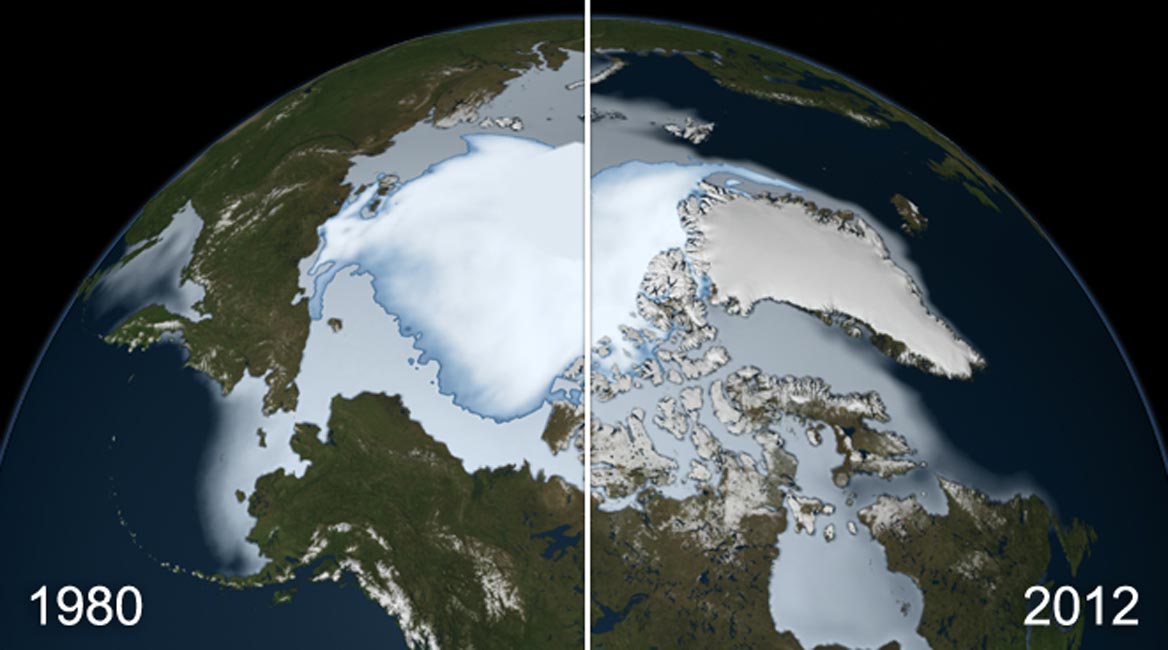
    Recent measurements indicate the arctic is warming twice as fast as the rest of the planet, with sea ice this summer shrinking to its smallest extent on record.
    Natural feedbacks are amplifying the warming as loss of reflective sea ice causes the ocean to absorb more of the sun's energy, melting more sea ice, which causes more energy absorption, and so on.

    read more...

    9/17/2012

    What lies beneath? Antarctic mission to find life isolated deep under the ice


    Twelve British scientists are about to embark on a gruelling expedition to the Antarctic, sleeping and living packed together in small tents for months on end, testing their endurance of the conditions – and one another – in a quest to uncover a lost world frozen beneath the ice for hundreds of thousands of years.

    Their search for microbial lifeforms will take them to the darkest depths of an Antarctic lake that has been buried under three kilometres of ice.
    The British team will later this year start to drill through the thick ice sheet of West Antarctica to retrieve samples of water and mud from Lake Ellsworth, one of about 150 subglacial lakes in the frozen continent.

    read more...
     
    Copyright © 2018 Great Red Comet-Earth Science Chronicles • All Rights Reserved.
    Template Design by BTDesigner • Powered by Blogger
    back to top