Featured Story

Mangroves move inland as seas rise

Adapting to the damaging effects of climate change, plants are gradually moving to where temperatures are cooler, rainfall is greater, f...

Showing posts with label Volcanic Alerts. Show all posts

5/06/2016

Mysterious fish die-off in Lake Toba, the largest volcanic lake in the world, terrifies residents

Lake Toba is the largest volcanic lake in the world occupying the caldera of a supervolcano on the Island of Sumatra in Indonesia.

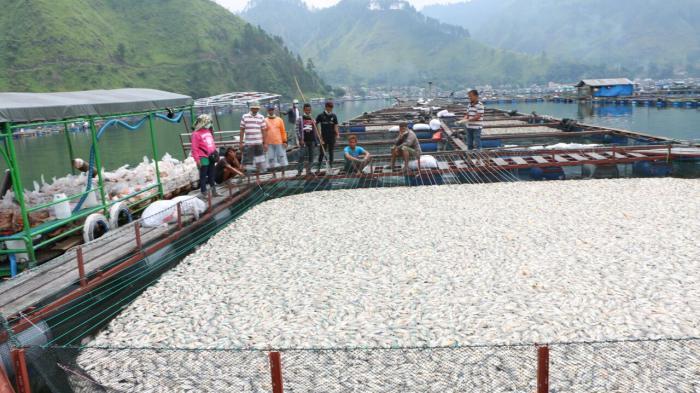
Millions of fish were found dead by fishermen between May 3 and May 5, 2016. Officials are unable to find the source of the mass killing but think it is linked to the lack of dissolved oxygen in the water. Could the drop in oxygen content in the north-east of lake Toba be the result of volcanic activity of some kind?

  It all started one month ago, when fishermen at Lake Toba started to find dead fish in their nets.


lake toba mass die-off, lake toba fish mass die-off, lake toba eruption, volcanic unrest lake toba, mysterious fish kill lake toba, mysterious mass die-off lake toba, lake toba supervolcano eruption
via Beritasatu
But the mysterious die-offs have suddenly increased beginning of this month, when professional fishermen caught more than 320 tones (May 3, 2016) and then 800 tons (May 5, 2016) of dead fish… In overall about 1500 tones in 3 days! So millions of fish!


lake toba mass die-off, lake toba fish mass die-off, lake toba eruption, volcanic unrest lake toba, mysterious fish kill lake toba, mysterious mass die-off lake toba, lake toba supervolcano eruption
via Vulkania.ru
Fishermen report these apocalyptical fish kills have never happened before. Normally, they only find a few dead fish. But this time, all the fish are dead.


 Officials aren’t able to clearly pinpoint the cause of this still unexplained mass die-off but believe it is related to the lack of dissolved oxygen in the water.


Strange Sounds
read more...

2/19/2014

Protected forests destroyed by Mt Kelud`s eruption

Blitar, East Java (ANTARA News) - Mount Keluds eruption last Thursday has damaged 70 percent of protected forests within a radius of three kilometers around the volcano, a forestry company spokesman stated here on Tuesday.

The spokesman of Blitar district chapter of state-owned forestry company Perum Perhutani, Heri Purwanto, noted that total forests that have been severely damaged have reached more than 2,580 hectares.

The forests that have been damaged reached 70 percent of the total forests on the mountains slopes covering 3,885.4 hectares of them.

"This is still our temporary estimate made based on the 1990 eruption that destroyed up to a radius of five kilometers," he pointed out.

Besides that he added that Perhutani has also directly checked the affected area.

He stated that the worst damage was found in Plot 3, RPH Penataran in Wingli reaching 1,375 hectares out of a total of 1,738.4 hectares.

He added that the area is located right in the middle of the crater or the eruption center.

An equal amount of damage was found at Plot 6A in Wlingi reaching 1,205 hectares out of a total of 2,146.9 hectares.

"Total loss suffered by the state is estimated to be at Rp 19 billion," he commented.

He pointed out that damages were also found in a number of production forests in buffer zones beyond a radius of three kilometer from the peak.

However, it is believed it was not as bad as those within a radius of three kilometer from the crater.

"As in the 1990 eruption, molten lava and hot volcanic materials have caused massive destruction," he remarked.

It would take three to four years to rehabilitate the forests based on this estimate, he pointed out.

He added that Perhutani in Blitar is still collecting forest destruction data before reporting the final results to the ministry of forestry for future rehabilitation planning.


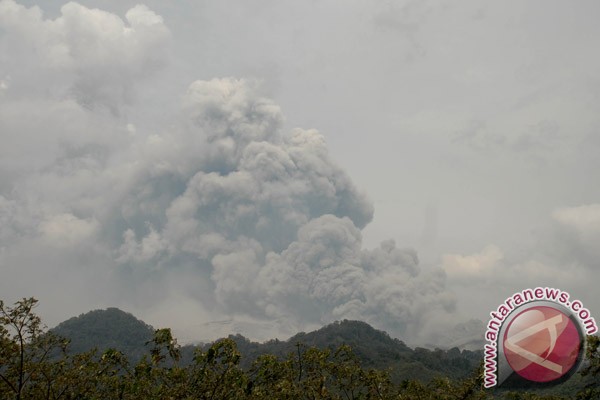
Above photo document of volcanic ash soaring out of Kelud visible from a distance of five kilometers in the hamlet of Kampung Newer, Sumber Sari, Nglegok, Blitar, East Java, on Friday (Feb. 14, 2014).(ANTARA/M. Risyal Hidayat)

Antara News 
read more...

2/04/2014

Ecuador Volcano Blows Sky-High


Ecuador's Tungurahua volcano exploded into life this weekend, blasting three times in an hour on Saturday (Feb. 1) and spewing ash 5 miles (8 kilometers) into the air. The ash caused total darkness in the nearby sector of Chacauco, Ecuador's Instituto Geofisico (IG-EPN) reported. The ash is streaming to the south and southwest.

Pyroclastic flows — superheated, flowing plumes of ash, gas and lava — raced more than 5 miles (8 km) down Tungurahua's slopes and crossed at least one road, the IG-EPN said. However, thanks to an early warning provided by seismic tremors beneath the volcano that started Jan. 30, nearby residents were evacuated and a state of emergency declared in the provinces of Tungurahua and Chimborazo, according to local news reports. This is the biggest eruption at Tungurahua since late October 2013.

As Tungurahua woke, an ongoing eruption at Indonesia's Sinabung volcano took a tragic turn. Mount Sinabung's violent eruption Saturday killed 16 people in Sukameriah, the first deaths since the volcano's first blasts four months ago. The deaths came one day after authorities allowed thousands of residents who had been evacuated to return to their homes, saying the volcano's activity was decreasing. However, those killed were inside a 3-mile-across (5 km) "red zone" around the volcano.

Live Science
read more...

1/17/2014

Blue Lava Flows From Kawah Ijen - Indonesia's Deadly Acid Volcano


There are places on this planet that are just as beautiful as hostile.
There are also a few people who dare to risk their lives in order to photograph and film some of the most hazardous environments on Earth.
One of them is Photographer Olivier Grunewald who has been taking photos of volcanoes since 1997.
In 2008, Grunewald learned about the Kawah Ijen, Indonesia's deadly acid volcano and he decided to photograph and create a documentary about one of the most beautiful and dangerous volcanoes on this planet.
Supervolcanoes are unpredictable ticking time bombs with the power to destroy the entire world. This is one of the reasons why they should be studied and monitored carefully. They are also often very beautiful, like for example the Dallol Volcano which located in the Danakil Depression in Ethiopia.


Kawah Ijen is part of the Ijen volcano complex in East Java, Indonesia. The volcano is 2,600 meters tall (8,660ft), topped with a large caldera and a 200-meter-deep lake of sulfuric acid.
The quietly active volcano emits gases through fumaroles inside the crater, and local miners have tapped those gases to earn a living.
The miners who rely on the sulfur work in awful conditions at the bottom of the crater.
They do not possess adequate equipment or clothes to perform this kind of dangerous work.
Miners here wear nothing other than t-shirts and trousers as they collect in baskets the yellow material.
Toxic fumes give off all the time and the molten sulfur is heated to more than 240F.
Image:  While these pictures may appear to be from another planet, they are in fact produced by burning sulphur here on Earth. Image credit & copyright: Olivier Grunewald 


Message to Eagle
read more...

1/16/2012

25 Indonesian Volcanoes Showing Abnormal Activity

Twenty-five volcanoes in Indonesia, including Anak Krakatau, above, are showing signs of increased activity, a presidential aide said on Saturday. (Reuters Photo)
Padang, West Sumatra. Twenty-five volcanoes in Indonesia are now showing abnormal activity or have been put on alert or watch status, presidential special aide Andi Arief said here on Saturday.

“According to official data, 25 volcanoes are now under alert or watch status and they must be given priority with regard to disaster mitigation planning at district or city levels,” he said at a workshop on journalists’ role in disaster management.

He said in West Sumatra there were two volcanoes that need to be closely watched, namely Mount Marapi and Mount Talang, as they are still under alert status.

Mount Marapi is located in Agam and Tanahdatar districts and rises 2891 meters above sea level, and Mount Talang (2597 meters above sea level) in Solok district was located around 40 kilometers from the provincial capital Padang.

read more...

7/14/2011

Huge Underwater Volcanoes Discovered Near Antarctica

Newly-discovered volcanoes. The peak in the foreground is thought to be the most active, with eruptions in the past few years.
CREDIT: British Antarctic Survey.
A string of a dozen volcanoes, at least several of them active, has been found beneath the frigid seas near Antarctica, the first such discovery in that region.
Some of the peaks tower nearly 10,000 feet (3,000 meters) above the ocean floor — nearly tall enough to break the water's surface.
"That's a big volcano. That's a very big volcano. If that was on land it would be quite remarkable," said Philip Leat, a vulcanologist with the British Antarctic Survey who led a seafloor mapping expedition to the region in 2007 and 2010.

read more...

4/12/2011

Yellowstone Supervolcano Plume Is Bigger Than Thought

This image, based on variations in electrical conductivity of underground rock, shows the volcanic plume of partly molten rock that feeds the Yellowstone supervolcano. Yellow and red indicate higher conductivity, green and blue indicate lower conductivity. Made by University of Utah geophysicists and computer scientists, this is the first large-scale "geoelectric" image of the Yellowstone hotspot. (Credit: University of Utah.)
ScienceDaily (Apr. 10, 2011) — University of Utah geophysicists made the first large-scale picture of the electrical conductivity of the gigantic underground plume of hot and partly molten rock that feeds the Yellowstone supervolcano. The image suggests the plume is even bigger than it appears in earlier images made with earthquake waves.
"It's like comparing ultrasound and MRI in the human body; they are different imaging technologies," says geophysics Professor Michael Zhdanov, principal author of the new study and an expert on measuring magnetic and electrical fields on Earth's surface to find oil, gas, minerals and geologic structures underground.
"It's a totally new and different way of imaging and looking at the volcanic roots of Yellowstone," says study co-author Robert B. Smith, professor emeritus and research professor of geophysics and a coordinating scientist of the Yellowstone Volcano Observatory.
The new University of Utah study has been accepted for publication in Geophysical Research Letters, which plans to publish it within the next few weeks.

read more...

2/03/2011

'James Bond' Volcano Menaces Japan Island

Mount Shinmoedake spews volcanic ash in the background on Japan's southernmost main island of Kyushu, Wednesday, Feb. 2, 2011. The 4,662-foot (1,421-meter) volcano burst back to life last week covered wide areas in ash, shot boulders onto distant roads, knocked down trees and broke hundreds of windows in hotels and offices.

In the James Bond version, circa 1967, Japan's Mount Shinmoe was a serene, extinct peak with a scenic, lake-filled crater that provided the perfect perch for 007 and his bikini-clad partner to surveil the lair of supervillain Ernst Stavro Blofeld.
In real life, it turns out the volcano doesn't have a secret rocket base hidden in its depths as it did in "You Only Live Twice."
It's also not extinct.
In its biggest series of eruptions in 52 years, Mount Shinmoe burst back to life last week and is wreaking havoc with airline schedules, forcing schools and roads to close and dumping ash and rocks across towns on Kyushu, the southernmost of Japan's four main islands.
On Thursday, the volcano spewed a huge plume one mile (1,500 meters) into the air and sent rubble cascading down its forested slopes. Officials say they expect the eruptions to continue, and possibly intensify, for weeks to come.

read more...

8/29/2010

Indonesian Volcano Awakens After 400 Year Slumber

(Reuters) - Thousands of Indonesians were evacuated from the slopes of a volcano on Sunday after it erupted for the first time in more than 400 years, spewing out lava and sending smoke and dust 1,500 meters (5,000 feet) into the air.
Mount Sinabung, in the north of the island of Sumatra, began erupting around midnight after rumbling for several days, prompting some villagers to panic before the mass evacuation got under way.


read more...

2/12/2010

Montserrat volcano shoots ash 9 miles into sky

SAN JUAN, Puerto Rico -- A volcano on Montserrat shot ash some nine miles (15 kilometers) into the sky Thursday, one of its most dramatic events since a devastating 1997 eruption that drove away half the Caribbean island's population.

The partial collapse of the dome in the volcano's crater also unleashed flows of hot gas and rocks, triggering sirens for the evacuation of about 20 people from a nearby village.

Paul Cole, director of the Montserrat Volcano Observatory, said it appeared to be the most material ejected by the volcano in about four years. He estimated 10 percent to 15 percent of the hardened lava dome had collapsed.

"When we're looking at the lava dome now, there's a large scoop out of it that's missing," Cole said. The dome has crumbled several times since the volcano became active in 1995, and Cole said it is possible activity will settle down as the dome builds itself up again. He said there is no immediate cause for concern about more dangerous eruptions.

The 1997 eruption killed 19 people and buried much of the island, including its former capital, Plymouth, which is now abandoned. Half the British territory's 12,000 inhabitants left.
read more...

1/13/2010

Crack At Turrialbla Volcano Getting Larger

Upon closer inspection, experts of the Universidad de Costa Rica (UCR) say that the enormous crater of the Turrialba volcano has gotten larger following last week's activity, which will in turn cause landslides within the crater, which in turn could mean more eruptions.

Unfortunately the cold front that has gripped Costa Rica this weekend has also affected the weather conditions, rain and strong winds, have been clouding visibility of the crater to confirm all the changes.

Geologists and volcanologists were at least able to confirm that the crack on the wall of the volcano is getting larger, confirmed by flybys by helicopters during a break in the weather.

The experts say the constant spewing of gases is causing the crack to get bigger and could collapse the volcano's crater wall, causing the volcano to spew out the falling material.

Area residents, as well as control posts around the volcano, report feeling seismic activity.

The recommendation is to stay clear of the area and authorities are restricting access to the national park, evacuating anyone found within the safety zone.

A "yellow" alert is being maintained.
read more...

12/22/2009

Philippines Mayon volcano eruption is Immenent

The Philippines Mayon volcano eruption, expected any day now, could pose lingering danger and keep farmers off their land for months.
Tens of thousands of refugees from the area around the Mount Mayon volcano face an anxious Christmas in evacuation centers. Their lives are safe, but they can now only watch and pray that an eruption will not destroy their livelihoods.

Residents from the eastern Philippines could face weeks or even months away from their land, leaving their homes unguarded and fields untended. Officials have learned from previous eruptions of Mayon and other volcanoes in the Philippines: A quick return is not the safest course.

"Will this activity last for months? Yes. In 2006, it emitted ash and oozed lava for two months," says Renato Solidum, director of the Philippine Institute of Volcanology and Seismology based in Manila.
read more...

11/03/2009

Hong Kong Cold Blast

Temperatures are set to plunge tomorrow as strong winds blow in from the mainland - as boffins in Beijing claim credit for an early cold snap that caused chaos for many Hong Kong travelers.Four Hong Kong-Beijing flights were canceled and 21 delayed yesterday as the capital felt the full blast of a strong cold front that has pushed temperatures to below zero.
The blizzard - the earliest to hit the capital in 40 years - was caused by "artificial means," according to state media which quoted the Beijing Weather Modification Office.
"We won't miss any opportunity for artificial precipitation since Beijing is suffering from a lingering drought," said Zhang Qiang, who is in charge of the office.
Zhang said that, according to preliminary calculations, more than 16 million tonnes of snow had been artificially created.
"We have used a total of 186 doses of silver iodide since 8pm on Saturday," she said.
The Hong Kong Observatory is forecasting temperatures will drop as low as 17 degrees Celsius tomorrow as a cold front moves in on Guangdong.
Observatory scientific officer Tong Yu-fai said the dip in temperatures over the next few days is related to the cold front hitting Beijing.
read more...

4/28/2009

Residents Brace for Volcanic Eruption

INDONESIA - Residents and government officials were preparing late on Monday for a major eruption from Central Java’s Mount Slamet volcano after the earth started shaking at a rate of 95 tremors a minute. "Even though the earthquake activity is increasing, we have not yet decided to raise Slamet to the highest alert level, or awas status, as we think the danger level will continue to fluctuate.” The mountain, 215 kilometers east-southeast of Jakarta, continued to spew bursts of lava and emit high levels of volcanic ash, which had caused some nearby residents to suffer upper respiratory infections. “The mountain has sprayed molten lava up to 600 meters into the air and we have recorded bursts of volcanic ash up to 112 times within a six-hours period.” The vulcanology agency is also currently monitoring 11 other volcanoes across the archipelago that have shown signs of increased activity over the last month. They include Soputan in North Sulawesi Province; Dukono on North Halmahera Island in Maluku Province; Mount Ibu in Maluku; Anak Krakatau in the Sunda Strait; Egon in East Nusa Tenggara Province; and Semeru and Bromo in East Java Province.
read more...

4/06/2009

Uptick in Global Volcanic Activity

Alaska's Mt. Redoubt volcano is a sight to behold
It has been a while since Outposts shared images from Alaska's Mt. Redoubt volcano, which continues to rumble and bark and spew steam and ash high and far across a wintry landscape.

Redoubt continues to make breathing uncomfortable for many and to disrupt travel to and from Anchorage on Alaska Airlines (though there are currently normal operations and no ash fall warnings). Also, this weekend, six million gallons of oil at the nearby Drift River terminal will be moved to a safer location.The volcano's last major eruption was Tuesday and scientists with the Alaska Volcano Observatory say a lava dome is forming. That hardened lava atop the crater might ultimately become unstable and lead to more explosive eruptions. In fact, this tempestuousness might last months, as it did in 1989-90.

More Volcanic Activity
CHILE - Llaima volcano, one of the most active in South America, spewed out a river of lava more than 1,000 metres long on Saturday in a fresh eruption, prompting officials to order dozens of people to evacuate. The lava and hot gases from the latest eruption are melting snow on the sides of the volcano, and authorities say some towns are in danger of being hit by mudslides. An ash-swollen river near the volcano had swept away a pedestrian bridge, but there was no other damage. Bright red bursts of lava were visible in the night sky as Llaima erupted. 

COSTA RICA - Experts Predicting Major Activity From Arenal Volcano - Experts of the Red Sismológica Nacional UCR-ICE are warning that the volcán Arenal could spew out lava and ash in the coming days and has asked area residents to be on the alert and follow the directions of the Comisión Nacional de Emergencias, in the event of an eruption. The alert is based on a prognosis following 45 tectonic earthquakes in the colossus, registered during the month of March.
read more...

3/12/2009

Volcanic smog smothers farmers in Hawaii island

Pahala, Hawaii: Leafless monkey pod and browning Norfolk pine trees litter Ted Seaman's nursery in the small town of Pahala on the southern edge of Hawaii's largest island.
At fault are the noxious fumes that have been pouring out of the Kilauea volcano in unprecedented volumes since last spring.
"You can only go so far before you say forget it," said Seaman, who has since taken a job trimming trees. The 53-year-old is focused on saving enough money to file for bankruptcy.
Sulphur dioxide from the volcano has wiped out multiple small farms and nurseries in the nearby largely rural district of Kau.
The gas, which creates volcanic smog when mixed with sunlight and air, threatens the viability of some flower and vegetable crops. Roses, sunflowers, protea, lettuce, tomatoes and even medical marijuana are hurt by the smog.
Image: Claudia McCall picks vog-burn damaged leaves from sprayroses at the McCall Flower Farm in Wood Valley near Pahala,Hawaii
read more...

2/06/2009

Nevado del Huila about to erupt, say experts

Columbia, S.A.
A major eruption of Colombia's highest volcano, the Nevado del Huila, seems imminent. This was revealed by experts and authorities on Thursday. A fly-over performed on Wednesday showed a large 'dome' of lava hanging over the volcano, which could indicate that an eruption is about to occur. As such, those living in the danger area were ordered to evacuate immediately. "The volcano has a significantly strong dome and we don't know when an eruption could occur." It is however certain that the dome is still growing which means an increased level of danger. The Nevado del Huila began showing activity in 2007, after having remained dormant for more than 500 years. Four eruptions have occurred since, most recently in November last year. That particular eruption reportedly took ten lives. If experts are right, a next eruption could be stronger than any of the previous four.
read more...

2/02/2009

Japanese Volcano Erupts

Japan's Mount Asama volcano has erupted, spewing smoke almost 2km (1.3 miles) into the air and causing ash to drift over parts of the capital, Tokyo.
There were no reports of injuries or damage in the sparsely populated area around the mountain, 145km north-west of Tokyo.
Chunks of rock from the explosion were found about 1km from the volcano.
Residents living within a 4km radius of the mountain have been urged to be cautious.
Volcanic ash fell on nearby areas as well as parts of Tokyo, Japan's meteorological agency said.
TV reports showed neighbourhoods sprinkled with white flakes.
Mount Asama is 2,568m (8,425 ft) high, with snow-covered peaks. No lava flows could be seen.
Video: Volcano Erupts
read more...

1/29/2009

Scientists Fear Volcano Could Bury Anchorage in Ash

ANCHORAGE, Alaska  —  It's been nearly 20 years since Alaska's Mount Redoubt erupted, but that time of tranquility might end.
Recent seismic activity could be a prelude to an eruption, "perhaps within hours to days," said geologists from the Alaska Volcano Observatory.
The 10,197-foot peak sits about 50 miles west of Kenai and 100 miles southwest of Anchorage. It last erupted during a five-month stretch beginning December, 1989.
read more...

1/22/2009

Evacuations amid fears for volcanic eruption

Columbia, S.A.
A possible new eruption of the Nevado del Huila volcano forced authorities to evacuate villages and settlements at risk of being flooded in case of an eruption.
The mudslide following an eruption of the volcano in November last year killed several people and destroyed a large part of Belalcázar, a town on the banks of the Rio Paéz.
About 4,000 people living near the river are now evacuated.
Disaster authorities are monitoring the volcano and will evaluate how long the people will be forced to stay away from their homes.
read more...
 
Copyright © 2018 Great Red Comet-Earth Science Chronicles • All Rights Reserved.
Template Design by BTDesigner • Powered by Blogger
back to top