Featured Story

Mangroves move inland as seas rise

Adapting to the damaging effects of climate change, plants are gradually moving to where temperatures are cooler, rainfall is greater, f...

Showing posts with label Extinction. Show all posts

3/16/2016

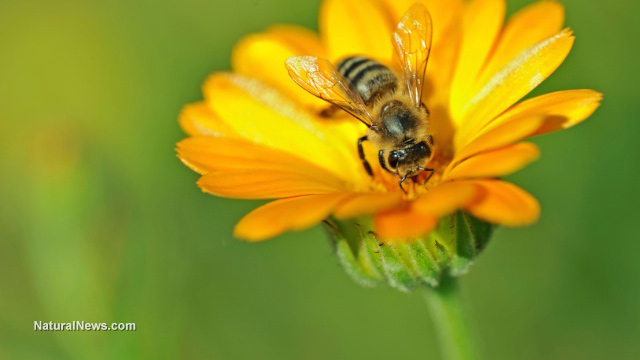
Wild bees, butterflies and other pollinators are on the path to extinction

Pollinating insects such as bees and butterflies contribute around $29 billion to U.S. agriculture every year, according to a 2010 study by Cornell University. They are responsible for the pollination of hundreds of crops, including apples, almonds, blueberries, asparagus and oranges.

However, an alarming UN report predicts that these pollinating species are on the path to extinction – something that would have a catastrophic impact on global food supplies. According to The Associated Press, the report suggests that we need to take immediate action to prevent the extinction of these species, before it is too late.

The importance of pollinators

Research has shown that the value of insects to agriculture is enormous and irreplaceable, with the continued decline in pollinator populations possibly leading to an increase in global malnutrition according to Science magazine. This is because they support crops that provide an essential food supply to regions of the world that are already suffering from malnutrition and food shortages – meaning that these regions will be hit the hardest by the decline.

The UN warns that, of approximately 20,000 pollinating species, two out of five invertebrate pollinators (such as bees and butterflies) are seeing a huge decline in numbers. This isn't a new decline and is something that scientists have been observing for several years as reported by Global Research.

What is causing the decline in numbers?

Changes to farming practices have meant that the diversity of plant species in any one area is much more restricted and there are fewer wild flowers for pollinators to feed on. This is a huge problem in the U.S. where large expanses of land are dedicated to growing fields of only a single crop.

Meanwhile, the growth of cities and urbanization of our countryside has removed some of the vital habitat for bees and other pollinators, meaning that they need to travel further to find food. The combination of this habitat removal with the impacts of global warming, which is altering the types of plants that are able to grow in different locations, means that our pollinators are actually starving to death.

The decline has also been associated with pesticide use, and NOLA.com has reported that neonicotinoids in particular could be a problem for pollinators. Neonicotinoids are a controversial type of pesticide that attacks the nervous systems of "pests" but is not species specific – meaning that bees and other pollinators are also affected.

In addition to pesticides, herbicides are also playing a part in this decline, with popular agrichemical Roundup, produced by Monsanto, also being linked to the widespread decline of two key pollinators – honeybees and monarch butterflies. This herbicide wipes out many of the plants that pollinators depend upon for food, such as milkweed.

This UN report has taken two years to complete and is the result of the cooperative work of many scientists from around the world. The report, which draws on a variety of scientific studies, states, "The variety and multiplicity of threats to pollinators and pollination generate risks to people and livelihoods. These risks are largely driven by changes in land cover and agricultural management systems, including pesticide use."

Local action is required in multiple countries in order to solve the problem, and government agencies need to give more careful consideration to the way that farming is impacting the land and the way that crop production is managed. In the UK, farmers are now being paid to plant wildflowers in hedge rows and on unused pieces of land in order to provide food for bees, which is something that could also help pollinators in the U.S. if the same incentives were put in place. If you are a keen gardener, you can also play your part by growing your own bee colony, which not only provides you with honey but also helps to ensure that there are enough pollinators around to pollinate the world's food supply for years to come.
read more...

6/04/2014

New study shows world is on the brink of sixth great extinction


WASHINGTON — Species of plants and animals are becoming extinct at least 1,000 times faster than they did before humans arrived on the scene, and the world is on the brink of a sixth great extinction, a new study says.
The study looks at past and present rates of extinction and finds a lower rate in the past than scientists had thought. Species are now disappearing from Earth about 10 times faster than biologists had believed, said the study’s lead author, biologist Stuart Pimm of Duke University.
“We are on the verge of the sixth extinction,” Pimm said from research at the Dry Tortugas. “Whether we avoid it or not will depend on our actions.”
The work, published Thursday by the journal Science, was hailed as a landmark study by outside experts.
Pimm’s study focused on the rate, not the number, of species disappearing from Earth. It calculated a “death rate” of how many species become extinct each year out of 1 million species.
Image Above: 
This handout photo, taken Dec. 2012, in Brazil, provided by Stuart Pimm, Duke University, shows a baby golden lion tamarin. Once thought to be extinct, this tamarin is a success story because biologists have helped set aside land for them. Species of plants and animals are going extinct 1,000 faster than they did before humans, with the world on the verge of a sixth great extinction, a new study says. The study looks at the past and present rates of extinction and found a lower rate in the past than scientists had thought. Photo: AP Photo/Stuart Pimm, Duke University
 Image: This undated handout photo, taken in 2010, provided by Terry Goss Photography USA/Marine Photobank, shows an Oceanic whitetip shark. The oceanic whitetip shark was once one of the most plentiful predators on Earth and now is rarely seen. Species of plants and animals are going extinct 1,000 faster than they did before humans, with the world on the verge of a sixth great extinction, a new study says. AP Photo/Terry Goss, Terry Goss Photography USA/Marine Photobank


In 1995, Pimm found that the pre-human rate of extinctions on Earth was about 1. But taking into account new research, Pimm and his colleagues refined that background rate to about 0.1.
Now, that death rate is about 100 to 1,000, Pimm said.
Numerous factors are combining to make species disappear much faster than before, said Pimm and co-author Clinton Jenkins of the Institute of Ecological Research in Brazil. But the No. 1 issue is habitat loss. Species are finding no place to live as more places are built up and altered by humans.
Add to that invasive species crowding out native species, climate change affecting where species can survive and overfishing, Pimm said.
The buffy-tufted-ear marmoset is a good example, Jenkins said. Its habitat has shrunk because of development in Brazil, and a competing marmoset has taken over where it lives. Now it’s on the international vulnerable list.
Image: This handout photo, taken in 2009 in Nazsre Paulista, Sao Paulo State, Brazil, provided by Roberto de Lara Haddad, shows a Buff-tufted-ear marmoset which is listed as a vulnerable species because of habitat loss. Species of plants and animals are going extinct 1,000 faster than they did before humans, with the world on the verge of a sixth great extinction, a new study says. AP Photo/Roberto de Lara Haddad


The oceanic white-tip shark used to be one of the most abundant predators on Earth, but they have been hunted so much they are now rarely seen, said Dalhousie University marine biologist Boris Worm, who wasn’t part of the study but praised it. “If we don’t do anything, this will go the way of the dinosaurs.”
Five times, a vast majority of the world’s life has disappeared in what have been called mass extinctions, often associated with giant meteor strikes. About 66 million years ago, one such extinction killed off the dinosaurs and three out of four species on Earth. Around 252 million years ago, the Great Dying wiped out about 90 per cent of the world’s species.
Pimm and Jenkins said there is hope. Both said the use of smartphones and applications such as iNaturalist will help ordinary people and biologists find species in trouble, they said. Once biologists know where endangered species are, they can try to save habitats and use captive breeding and other techniques to save the species, they said.
One success story is the golden lion tamarin. Decades ago the tiny primates were thought to be extinct because of habitat loss, but they were then found in remote parts of Brazil and bred in captivity, and biologists helped set aside new forests for them to live in, Jenkins said.
“Now there are more tamarins than there are places to put them,” he said.

Canada.com 
read more...

6/07/2012

Earth nearing 'tipping point,' study warns

Our planet is heading toward a sudden breakdown, a group of international scientists warn, unless humans adopt more sustainable practices.

Earth is rapidly headed toward a catastrophic breakdown if humans don't get their act together, according to an international group of scientists.
Writing Wednesday (June 6) in the journal Nature, the researchers warn that the world is headed toward a tipping point marked by extinctions and unpredictable changes on a scale not seen since the glaciers retreated 12,000 years ago.
"There is a very high possibility that by the end of the century, the Earth is going to be a very different place," study researcher Anthony Barnosky told LiveScience. Barnosky, a professor of integrative biology from the University of California, Berkeley, joined a group of 17 other scientists to warn that this new planet might not be a pleasant place to live.
"You can envision these state changes as a fast period of adjustment where we get pushed through the eye of the needle," Barnosky said. "As we're going through the eye of the needle, that's when we see political strife, economic strife, war and famine." [ Top 10 Ways to Destroy Earth ]

read more...

8/16/2011

Twenty Percent of All Mammals at Risk of Extinction

Elephants are among the mammals nearing extinction according to a new report. Click to enlarge this image.
Chris Jackson/Getty Images


At least twenty percent of all known mammals are nearing extinction, with large species at greatest risk, according to a recent assessment of the conservation status of 5,487 mammals.
Expanding agriculture and hunting are the primary extinction drivers, according to the findings, published in the latest Philosophical Transactions of the Royal Society B. That means humans causing the most severe mammal extinction period in history.
"The example I often tend to bring up is Tasmanian Devil, familiar to many from the Looney Tunes cartoons, because it's an example of how a species that is common, or at least not uncommon, can suddenly, through the emergence of a novel threat, be plunged into a steep decline," lead author Michael Hoffmann told Discovery News, explaining that a relatively new cancer, Devil Facial Tumor Disease, is wiping out this particular mammal.
Hoffmann, a researcher for the International Union for Conservation of Nature, and his team analyzed data gathered for IUCN's Red List Index. It covered the period from 1996, when all species were first completely assessed, until 2008, when they were reassessed.

read more...

7/12/2011

Frightening report warns of eminent ocean life collapse

(NaturalNews) World ecologists, toxicologists and fisheries scientists participating in a workshop staged by the International Programme on the State of the Oceans, IPSO, and the International Union for Conservation of Nature, IUCN, at Oxford University, are sounding grim warnings. Overfishing and ocean acidification could bring about a collapse of ocean life or a massive extinction event within a single generation unless humans curb the use of fossil fuels and reverse overfishing. The world`s seas and aquatic life are being sickened by global warming, acidification and loss of oxygen.
read more...

9/18/2007

Climate Change Brings Risk of More Extinctions

BLACKWATER NATIONAL WILDLIFE REFUGE, Md. -- What has gone missing here is almost as spectacular as the 8,000 acres of swampy wilderness that remain. And that makes it Chesapeake Bay's best place to watch climate change in action.

Visitors can see ospreys gliding overhead, egrets wading in the channels and Delmarva fox squirrels making their unhurried commutes between pine trees.

But then the road turns a corner, and Blackwater's marsh yields to a vast expanse of open water. This is what's missing: There used to be thousands more acres of wetland here, providing crucial habitat for creatures including blue crabs and blue herons. But, thanks in part to rising sea levels, it has drowned and become a large, salty lake. "If people want to see the effects" of Earth's increasing temperature, refuge biologist Roger Stone said, "it's happening here first."

But not just here. Around the world, scientists have found that climate change is altering natural ecosystems, making profound changes in the ways that animals live, migrate, eat and grow. Some species have benefited from the shift. Others have been left disastrously out of sync with their food supply. Two are known to have simply disappeared.

If warming continues as predicted, scientists say, 20 percent or more of the planet's plant and animal species could be at increased risk of extinction. But, as the shrinking habitat at Blackwater shows, the bad news isn't all in the out years: Some changes have already begun. "This is actually something we see from pole to pole, and from sea level to the highest mountains in the world," said Lara Hansen, chief climate change scientist at the World Wildlife Fund, a private research and advocacy group. "It is not something we're going to see in the future. It's something we see right now."

THE STOP GLOBAL WARMING INFORMATIONAL WEBSITE IS POSTED IN THE LOWER RIGHT SIDEBAR. YOU CAN VISIT ANYTIME AT YOUR CONVENIENCE FOR UPDATED NEWS AND EVENTS PERTAINING TO CLIMATE CHANGE.
read more...

4/17/2007

Climate change could trigger 'boom and bust' population cycles leading to extinction

April 16, 2007
Climate change could trigger "boom and bust" population cycles that make animal species more vulnerable to extinction. , according to Christopher C. Wilmers, an assistant professor of environmental studies at the University of California, Santa Cruz.
Favorable environmental conditions that produce abundant supplies of food and stimulate population booms appear to set the stage for population crashes that occur when several "good years" in a row are followed by a bad year. "It's almost paradoxical, because you'd think a large population would be better off, but it turns out they're more vulnerable to a drop in resources," says Wilmers.
Understanding how environmental changes influence fluctuations in animal populations is crucial to predicting and mitigating the influence of global climate change. In a paper that appears in the May issue of The American Naturalist, Wilmers describes a powerful new mathematical model that evaluates how climate and resources interact with populations, including a fine-grained analysis of impacts on juveniles, reproducing adults, and adults.
read more...

2/11/2007

Risk Of Extinction Accelerated Due To Interacting Human Threats

Earth News
Photo Credit: Top left: John Veron from Corals of the World. Top right: Wolcott Henry/Marine Photobank, Bottom left: Steve Spring/Marine Photobank, Bottom right: NASA-GSFC/Marine Photobank

Feb 07, 2007
The simultaneous effect of habitat fragmentation, overexploitation, and climate warming could accelerate the decline of populations and substantially increase their risk of extinction, a study in the Proceedings of the Royal Society B has warned.
Using experimental microcosm populations of rotifers (a type of zooplankton), the study found that individually each of these threats caused significant population declines. The study also found that the rate of declines was much accelerated when populations were exposed to more than one threat. These results indicate that multiple interacting threats are capable of causing rapid population extinction, and that all threats should be simultaneously reduced, if their synergies are to be avoided and if the current rate of species loss is to be reversed.
Continue


read more...

12/27/2006

China's Rare River Dolphin Now Extinct, Experts Announce

Animal Extinction
December, 2006

The rare Chinese river dolphin has gone extinct, according to scientists who could not find a single one of the animals during a six-week search on China's Yangtze River.
The small, nearly blind white dolphin, also known as the baiji, was nicknamed "the goddess of the Yangtze."

"It's possible that we missed one or two animals [during the search], but we can say the baiji is functionally extinct," August Pfluger, a Swiss economist-turned-naturalist who financed the expedition, said in a telephone interview from Wuhan, China.
(See China map)
"If there are any baiji left in the river, they won't have any chance of survival."
If Pfluger's team is correct, the baiji will be the first large aquatic mammal to have gone extinct since hunting and overfishing killed off the Caribbean monk seal in the 1950s.

read more...

11/14/2006

Global warming may kill Australian birds

Breaking Eco/Science News: Affects of Global Warming
Click Image to link to Info on Bird Extinction
Nov 14, 2006
NEARLY three quarters of all bird species in northeast Australia and more than a third in Europe could become extinct unless efforts to stop global warming were stepped up, according to a report by international environmental group WWF.
Up to 72 per cent of bird species in northeastern Australia and 38 per cent of bird species in Europe could disappear completely if the planet's temperature kept rising, it said.
"This report finds certain bird groups, such as seabirds and migratory birds, to be early, very sensitive responders to current levels of climate change," said WWF's director of climate change policy Hans Verolme.
"Large-scale bird extinctions may occur sooner than we thought," he said in Bird Species and Climate Change: The Global Status Report, released in Nairobi on the sidelines of UN climate change conference.
"If high rates of extinction are to be avoided, rapid and significant greenhouse gas emissions cuts must be made," WWF said.
Rising sea levels, changes in vegetation and altered temperatures were among the effects of climate change linked to greenhouse gas emissions that impacted negatively on bird species worldwide, it said.
VIDEO

Click the Camera to Begin the Presentation
Interviewee: Cagan Sekercioglu, Stanford University Center for Conservation Biology.
read more...
 
Copyright © 2018 Great Red Comet-Earth Science Chronicles • All Rights Reserved.
Template Design by BTDesigner • Powered by Blogger
back to top