Featured Story

Mangroves move inland as seas rise

Adapting to the damaging effects of climate change, plants are gradually moving to where temperatures are cooler, rainfall is greater, f...

Showing posts with label Crop Failure/Food Shortage. Show all posts

6/26/2014

Liberia caterpillar plague causes mass evacuation and crop destruction


A plague of caterpillars has forced thousands of people to flee their homes in northern Liberia, as well destroying crops, contaminating water and forcing schools to close. Image: One of millions of caterpillars moves through crops iin farms in Gbarpolu county, Liberia. Photograph: Ahmed Jallanzo/EPA
Residents of at least 25 villages and towns in Lofa and Gbarpolu counties have joined a mass exodus so far this month to escape the trail of caterpillar excrement, according to the Voice of America (VOA).
It is the second such invasion in five years. A state of emergency was declared in 2009 after tens of millions of caterpillars swept through at least 80 towns and villages in the centre and north of the country.
Dr Sizi Subah, deputy agriculture minister for technical services, told Liberia's The Inquirer that the caterpillars, which travel in huge numbers, have the capacity to destroy large areas since they feed on the leaves of cash crops such as coffee, cocoa and vegetables during the larva stage before developing into butterflies.
Subah linked the latest infestation to "climate change", the Inquirer reported.
The huge volume of excrement dropped by the caterpillars has contaminated wells and other fresh water sources, rendering them undrinkable. The pests have also colonised classrooms, forcing many schools in the area to shut down.
Jeremiah Toe, a nurse in one of the affected villages, told the VoA that the caterpillars pose a serious threat to public health. "The situation is alarming," he was quoted as saying. "We have informed the ministry of health. As you can see, the caterpillars are taking over the homes of residents. They have polluted the creeks. Even our clinic has been attacked by the caterpillars."
Smaller invasions of caterpillars occurred in 2011 and 2012. Winfred Hammond, a senior entomologist at the UN Food and Agriculture Organisation, told the VOA: "The biggest concern is the fact that this is becoming a regular occurrence. It's about time we seriously consider putting in place early warning systems and look at how we can contain or check this problem from becoming a big national concern. To prevent it as we've seen, you need to have a good surveillance system in place."
Liberian officials said they have begun spraying pesticides in a bid to control the plague.

The Guardian 
read more...

7/31/2012

Climate Change Is Already Shrinking Crop Yields

For years now, people have wondered how climate change will affect farming. How will humanity feed itself during a time of rising temperatures and recurring drought?
Here in the US, we're starting to get a taste of things to come—and it's bitter. Brutal heat is now roiling the main growing regions for corn, soy, and wheat, the biggest US crops. According to Bloomberg News, 71 percent of the Midwest is experiencing "drier-than-normal conditions," and temperatures are projected to be above 90 degrees in large swaths of key corn/soy-growing states Missouri, Illinois, and Indiana through July 7 if not longer.
As a result, Goldman Sachs projects that this year's corn yields will come in 7.5 percent below the USDA's projection of 166 bushels an acre. (Why is a Wall Street behemoth like Goldman Sachs fussing over corn yields? That's another story, altogether, and an interesting one). Accordingly, crop prices are rising steeply, Bloomberg reports.

read more...

6/23/2012

Colorado farmers are facing disaster


WELD COUNTY - Glenn Fritzler's family has been farming their 320 acres for 57 years. It is productive land that has helped them build their family. To succeed here, it took hard work, good soil and one thing they can't do without: water.
"Water to us is actually more valuable than gold," Fritzler said.
In recent years, that has not been a problem. Heavy snows and rains allowed Fritzler and other farmers in Weld County to irrigate their fields with surface water from the South Platte River. This year is different.
Because of the dry winter and spring the South Platte River is not flowing at a level to allow farmers, like Fritzler, to continue to use it as an irrigation source. Unless conditions change Fritzler will not receive any more above surface water for their crops.
"We have no surface water," Fritzler said. "We have an abundance of groundwater, but we do not have the permission to use it."

read more...

8/18/2010

Severe weather threatens world food supply

Extreme weather conditions across the globe are destroying crops, cattle and land, as nations struggle through things like droughts, floods and other natural phenomena. And while some say that these occurrences are natural, cyclic effects from variations in solar activity, others point to climate change as the culprit.

Russian wheat crop failures, Kansas cattle deaths and flooding in Pakistan are among the many struggles currently
being faced by nations around the world, but why are these extreme weather
conditions occurring in the first place? This is a question many are
asking as they work to cope with the destruction and seek a solution.

read more...

6/03/2008

International Food Crisis

The global food crisis looms as a humanitarian catastrophe that could dwarf even the 2004 Asian tsunami, posing an immediate threat to 290 million people, according to estimates released overnight by aid group Oxfam International. This is in addition to the 854 million people who already endured persistent hunger before food prices skyrocketed to a 30-year high - rising 83% in three years. As world leaders gather in Rome today for a three-day food summit, Oxfam warned of an UNPRECEDENTED threat to more than a billion people. "This crisis represents an enormous challenge - but also a genuine opportunity to deliver long-overdue reforms to the food and agriculture system."
read more...

5/17/2008

Food Riots are Coming to the U.S.

Food riots are coming to America? - The Midwest is at the heart of our wheat and corn production. All it will take is one bad drought - which Iowa expects. For the past 6 months North Dakota is in the worst drought ever - and now possibly a global drought - and our food supplies will take a serious hit. Extreme flooding like the Midwest and Mississippi just experienced are wiping out food crops. With escalating fuel costs, there will come a point when truckers are unable to make a living and simply have to shut down. A global pandemic would also shut down access to food and water supplies. Riots and food protests have already hit many nations: South Africa, Pakistan, Lebanon, Gaza, Kenya, Nicaragua, Mexico, Bahrain, the Emirates, Italy, Russia, Indonesia, Egypt in addition to Haiti, Cameroon, Senegal, the Ivory Coast, Mauritania, Bolivia, Peru, Thailand, Somali, Ethiopia, Burkina Faso, Uzbekistan, Yemen, India, and the Philippines. With food shortages threatening to become the biggest crisis of the 21st century, you can bet food riots are coming to America. Stock up now - buy in bulk - and pack for long-term storage any grain products and foods you regularly consume. The longer you delay, prices are only going to escalate, your options will dwindle, along with selection. If you keep your standby cash in a money-market fund you'll be lucky to get a 2.5% interest rate. Meanwhile the most recent government data shows food inflation for the average American household is now running at 4.5% a year. And some prices are rising even more quickly. The latest data show cereal prices rising by more than 8% a year. Both flour and rice are up more than 13%. Milk, cheese, bananas and even peanut butter: They're all up by more than 10%. Eggs have rocketed up 30% in a year. Ground beef prices are up 4.8% and chicken by 5.4%.
read more...

2/21/2008

Grim Predictions for Global Food Supply

Earth Changes


The amount of food available has dropped fairly precipitously since about the year 2000
—Julian Cribb, science journalist
The amount of food available has dropped fairly precipitously since about the year 2000. A group of academics believes the problems with increasing fuel costs and rising interest rates will be insignificant compared to looming global food shortages. Experts are discussing the growing scarcity of food and rising prices. "There's drought, there's biofuels, which is taking over a lot of agricultural land area, where we are burning millions of tonnes of grain in our cars these days, which we could be eating or feeding to animals. There is the impact of climate change and particularly we are running out of land and we are running out of water."

RELATED NEWS WARNING
Climate change could cause severe crop losses
in South Asia and southern Africa over the next 20 years, a study in the journal Science says. The findings suggest southern Africa could lose more than 30% of its main crop, maize, by 2030. In South Asia losses of many regional staples, such as rice, millet and maize could top 10%. The effects in these two regions could be catastrophic without effective measures to adapt to climate change. THE SCALE AND SPEED OF THE EFFECTS ON AGRICULTURE SURPRISED THE SCIENTISTS. The majority of the world's one billion poor depend on agriculture for their livelihoods. Yet it is also "the human enterprise most vulnerable to climate change". While relatively inexpensive changes, such as switching crops or altering planting seasons, could trim the losses, "the biggest benefits will likely result from more costly measures, including the development of new crop varieties and expansion of irrigation."
read more...

2/07/2008

Tajikistan 'facing catastrophe'

BBC News, Dushanbe
Tajikistan is in the grip of emergency food shortages, the UN's World Food Programme is warning.

The deteriorating food situation is part of the energy crisis which hit the mountainous nation in the middle of its coldest winter for five decades.

The cost of food has tripled in recent months, partially because of rising world prices.

Some humanitarian agencies claim Central Asia's poorest nation is heading towards catastrophe.

It's well below zero in Tajikistan, but most people have no electricity, no heating and now, increasingly, many don't have enough food either.

One family in the village of Sagdyan, outside the capital Dushanbe, said their four children were surviving on milk and rice. Their next door neighbours could not afford even that.

read more...

12/04/2007

Toll Of Climate Change On World Food Supply Could Be Worse Than Thought

Image:Parched ground cracks in a wheat field during the hot European summer of 2006. (Credit: iStockphoto/Susan Stewart)

Global agriculture, already predicted to be stressed by climate change in coming decades, could go into steep, unanticipated declines in some regions due to complications that scientists have so far inadequately considered, say three new scientific reports. The authors say that progressive changes predicted to stem from 1- to 5-degree C temperature rises in coming decades fail to account for seasonal extremes of heat, drought or rain, multiplier effects of spreading diseases or weeds, and other ecological upsets. All are believed more likely in the future. Coauthored by leading researchers from Europe, North America and Australia, they appear in a recent issue of the Proceedings of the National Academy of Sciences (PNAS).
read more...

10/11/2007

The Food Shortage Reality


The time of overflowing vats and overstocked shelves is coming to an end. We do not hear of huge surpluses in food production anymore, of massive stockpiled reserves for shipment to countries in famine, or as a hedge against times of extreme weather or blight by disease. Those days are over. The days of plenty are a thing of the past. Prepare now for increasing shortages of staple food products. The reality is that a number of historical leaders in agricultural exports are now becoming net importers of food products. In 1994, a Washington-based research group warned of a potential national food shortage and its consequences by or before 2030. But figure in the increasing occurrences of floods, hurricanes, earthquakes, drought and other unnatural disasters and it is sure to occur much sooner than predicted. Not only is most of the globe's arable land already under production, but 35 percent of that land is seriously degraded due to intensive chemically based farming practices. Add to this the increasing dependence of the farm sector on hybrid varieties that have no capacity to self-replenish (by the designs of such corporate entities as Monsanto Chemicals) plus the continuing escalation of energy prices, and you have a recipe for agricultural disaster.
read more...

8/31/2007

Floods spell 'crisis' for farming

Photo: Livestock have drowned and their winter feed has been destroyed

Great Britain
July, 2007

As the waters slowly recede, experts say the floods will leave a disaster for British farming in their wake.

Farmers' livelihoods have been devastated across the UK by the June and July deluges.

And now the impact looks set to hit the rest of us in the form of food shortages and raised prices.

"I don't want to exaggerate the problem we've got, but if I say it's a crisis, I'll be telling it exactly like it is," he told BBC Radio 4.

"We're only cropping 15 to 20% of what we should be.

read more...

8/29/2007

Sudan floods death toll reaches 101, crops ruined

Breaking Earth News
Sudan, Africa


<---Photo: A Sudanese man sits next to his belongings as water surrounds his shack near Khartoum August 21, 2007.


KHARTOUM, Aug 29 (Reuters) - Floods across Sudan have killed 101 people, spread disease and destroyed livelihoods by wiping out agricultural crops, officials said on Wednesday.On Tuesday, the United Nations appealed for $20 million to provide clean water, food and shelter to more than 3 million people in what Sudanese officials have called the worst floods in living memory."One hundred and one have died, and 278 were injured in the floods," Awad Widatallah Hussein, an official in the government's emergency response team, told Reuters.The flooding killed more than 36,000 livestock, he said.The floods have made at least 200,000 people homeless, and destroyed more than 42,000 hectares of crops, the U.N. humanitarian aid agency (OCHA) said in a statement.


<---Click the Interactive Map provided by the California Geological Survey
read more...

5/14/2007

Withering drought worsens; Georgia crops at risk

Georgia, USA

May, 2007
Crops are at risk because of a drought that has reached extreme conditions in 33 out of 159 counties. The dry weather is the WORST SEEN IN 38 YEARS by the agriculture department director. There have been longer and harsher droughts in the past, but he can't remember a year that was so dry this early. Apples, peaches and other crops that help make agriculture a $50 billion industry in Georgia are suffering badly. Fruit trees were already hard hit by an April freeze. Unless the state sees a dramatic increase in rainfall in the next few months, some farmers could lose their entire harvests. That could cripple the economy in Georgia's farm communities and drive up prices on peanut butter, fresh produce and the other crops that survive. The extreme drought conditions in 33 counties are expected by weather experts only ONCE EVERY 50 YEARS. Another 46 counties are rated as having severe drought, meaning the dry spell is as bad as experts would expect ONCE IN 20 YEARS. The rest of the state is under a moderate drought.

CROP FAILURE/ FOOD SHORTAGE

CALIFORNIA - CATTLE - San Luis Obispo County cattle ranchers are selling cattle off in RECORD NUMBERS after this season’s meager rainfall failed to produce enough grasses to sustain their herds. Cows and their calves are being sold nearly two months earlier than usual — and at lower weights — because ranchers say they’d rather sell than pay for expensive feed. Cattle and calves are the second most valuable agricultural product in the county, valued at more than $59 million last year. They are second only to wine grapes, which are valued at $151 million. The last dry season that pushed them to sell early struck in the late 1980s or early 1990s. “It’s been a long time since we’ve had a year like this, and I don’t know if it was this bad." Calves are weighing in about 450 pounds, when they often weigh as much as 650 pounds at the time of sale.
read more...

5/02/2007

Declining honeybees a ‘threat’ to food supply

About one-third of the human diet comes from insect-pollinated plants and the honeybee is responsible for 80 percent of that pollination, according to the USDA.

Breaking Earth News

USA

BELTSVILLE, Md. - Unless someone or something stops it soon, the mysterious killer that is wiping out many of the nation's honeybees could have a devastating effect on America's dinner p

late, perhaps even reducing us to a glorified bread-and-water diet.

Honeybees don't just make honey; they pollinate more than 90 of the tastiest flowering crops we have.

Among them: apples, nuts, avocados, soybeans, asparagus, broccoli, celery, squash and cucumbers. And lots of the really sweet and tart stuff, too, including citrus fruit, peaches, kiwi, cherries, blueberries, cranberries, strawberries, cantaloupe and other melons.

Continue Story

Video: Where have all the bees gone?
It's a problem that is baffling scientists, and has all sorts of farmers worried abou
their crops

read more...

4/29/2007

Storms Put Damper on U.S. Economy

USA
Photo: Runners in the 111th Boston Marathon had to cope with the unusual Spring nor'easter.

Halfway through, it was the COLDEST APRIL IN 24 YEARS. "The year-over-year change is AS EXTREME AS WE HAVE EVER SEEN." The extremes were especially noticeable two weeks ago, when a major nor'easter engulfed the mid-Atlantic and New England states. In New York's Central Park, 7.5 inches of rain fell - a record for one day in the month of April. The warm weather in March caused fruit trees in Ohio to bloom. But the snow in April severely damaged the crop. Some growers have lost their entire crop of apples. A weather-impact research firm in Pennsylvania issued a report that found soil temperatures are much lower than normal. "Optimistically, we're looking at May 5 before the planting can be completed. This could affect corn prices, which could even impact the price of gasoline since corn is used in making ethanol (now used as a blend in gasoline)."
read more...

3/21/2007

Crops Feel The Heat As The World Warms

Earth News
Climate Change Report
March 16, 2007

Science Daily — Over a span of two decades, warming temperatures have caused annual losses of roughly $5 billion for major food crops, according to a new study by researchers at the Carnegie Institution and Lawrence Livermore National Laboratory.
Continue


read more...

Food shortage as rains, snow hit Kashmir Valley

Kashmir: March 16, 2007
Click on Map to Enlarge

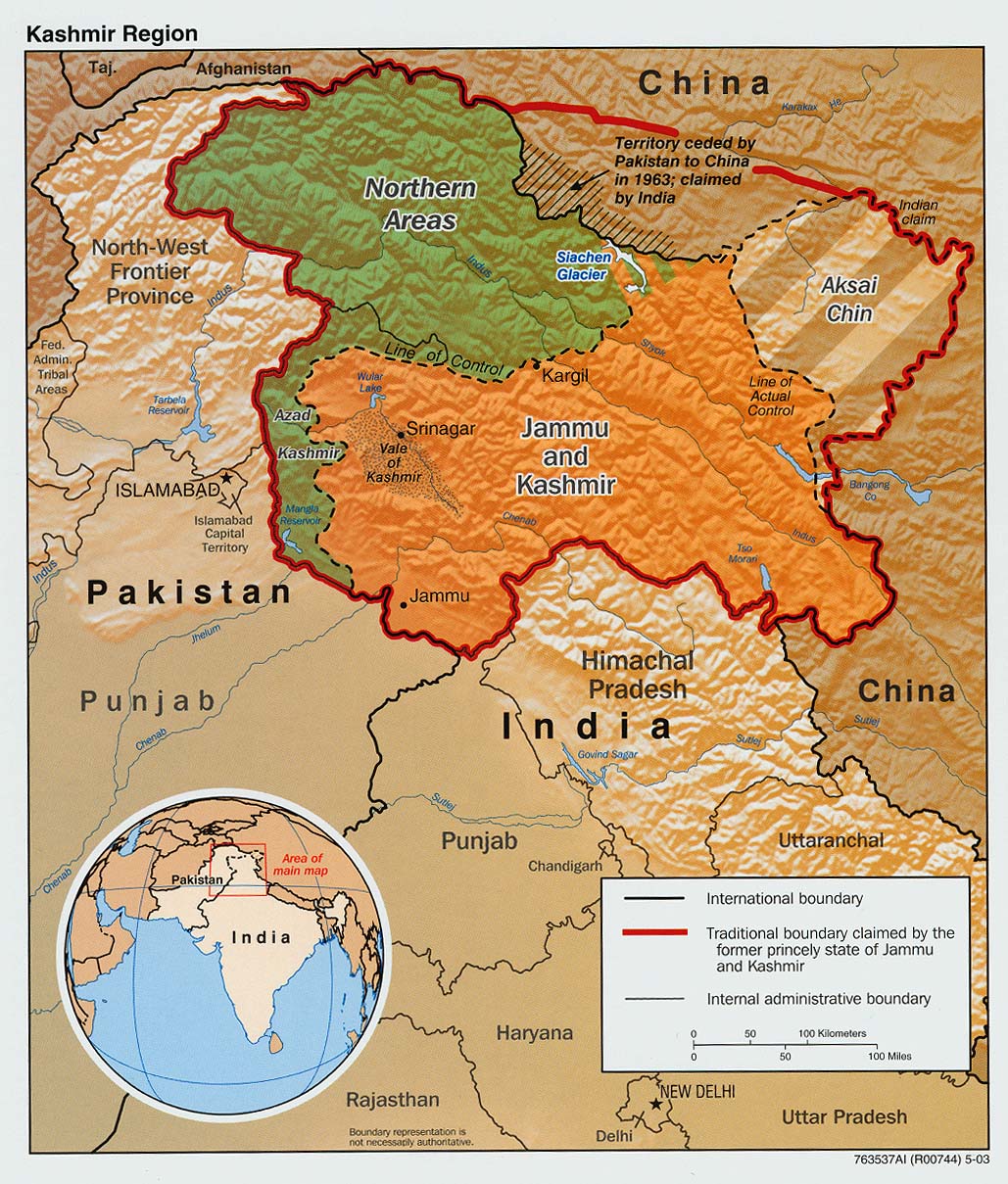
The Kashmir Valley is facing acute shortage of essential goods with the closure of the national Jammu-Srinagar highway for the fifth straight day yesterday due to heavy rains and snow. The only surface link to the Kashmir Valley with the rest of India was closed on Sunday after a fresh spell of heavy rains and snow. State authorities say it will take at least two more days to clear the mud and landslides at Panthal, a trouble spot on the 300km-long highway. Around 1,000 vehicles carrying essential supplies and hundreds of Kashmir-bound passengers are stranded on the highway. Power supply continued to remain disrupted for the fourth day in major parts of capital Srinagar and other towns following the heavy snowfall here. The spring snowfall has caused extensive damage to the cherry, almond, apricot and apple orchards, which were in full blossom. Horticulture experts are keeping their fingers crossed but they admit the damage to these famous Kashmir fruits is colossal especially the famous Kashmir cherry. Officials say the water supply would be restored in the city by this evening. The snowfall has led to drastic fall in the temperature though the sky is now clearing up.
read more...

3/16/2007

Hottest winter on record hurting crops, study says

Breaking Earth News: USA

Global Warming Alert

March 16, 2007
Providing compelling evidence that global warming is accelerating, scientists announced Thursday that this winter was the hottest on record -- and that surface temperatures around the world have been increasing at three times the rate they were before 1976. Real Full Article
read more...
 
Copyright © 2018 Great Red Comet-Earth Science Chronicles • All Rights Reserved.
Template Design by BTDesigner • Powered by Blogger
back to top